The Supreme Court on Wednesday appeared inclined to let a Tennessee man pursue claims that a Paramount Global sports website illegally shared his video-viewing history with Facebook, a case testing how a privacy law written for the era of VHS rental stores applies to tracking technology on today’s internet.
During roughly 90 minutes of argument in Salazar v. Paramount Global, a majority of justices seemed receptive to the view that the 1988 Video Privacy Protection Act protects any consumer of a company that provides videos—not only customers who pay for the videos themselves.
A newsletter, a tracking pixel and a 1980s law
Michael Salazar subscribed in 2022 to a free email newsletter from 247Sports.com, a Paramount-owned site covering college sports recruiting. He says he watched videos on the site while logged into Facebook, and that a tracking tool known as the Meta Pixel, installed without his consent, sent Facebook information about what he viewed. His proposed class action seeks the law’s maximum $2,500 in damages per violation, along with punitive damages and fees.
Lower courts threw the case out, ruling that Salazar was not a “consumer” under the statute because a newsletter is not audiovisual content. The Sixth Circuit agreed in a divided decision, prompting the Supreme Court to take up the question in January.
The law itself grew out of the 1987 confirmation fight over Judge Robert Bork, after a Washington journalist published a list of the videos Bork had rented. It bars a “video tape service provider” from knowingly disclosing personally identifiable information about any consumer without consent.
Justices weigh consent against a flood of lawsuits
Paramount’s lawyer, Paul Clement, warned that reading the law broadly would expose a wide range of businesses that host videos to litigation. Justice Brett Kavanaugh pushed back on what he called the “sky-is-falling concern,” noting that companies could still win on other elements of the statute and that a “very easy solution” was simply to obtain customers’ consent before sharing their data. Justice Elena Kagan made a similar point and suggested the case might be “the paradigmatic” example Congress had in mind.
Justice Ketanji Brown Jackson told Clement his position created a “line-drawing problem,” tying liability to which product a customer happened to buy rather than to the disclosure itself.
Other justices raised doubts that would not necessarily resolve the case. Justice Clarence Thomas, Justice Samuel Alito and Justice Amy Coney Barrett questioned whether a sports website that streams clips qualifies as a “video tape service provider” at all. “If I’m on Nordstrom’s website and I click to … see the model show me what the shoes are going to look like … that’s a profit motive,” Barrett said. She also asked whether Salazar had standing to sue, and Clement offered additional briefing on that issue.
Why it matters for the ad-tech economy
The act has become a frequent vehicle for class actions against media companies, retailers and other sites that embed tracking pixels alongside video. A ruling for Salazar would keep that litigation path open while leaving companies to fight over other definitions in the law, and would raise the stakes of obtaining explicit consent before sharing viewing data with advertising platforms. A decision is expected next year.
Sources & Credits
Reporting based on: SCOTUSblog; Bloomberg Law; Associated Press; Supreme Court docket 25-459.
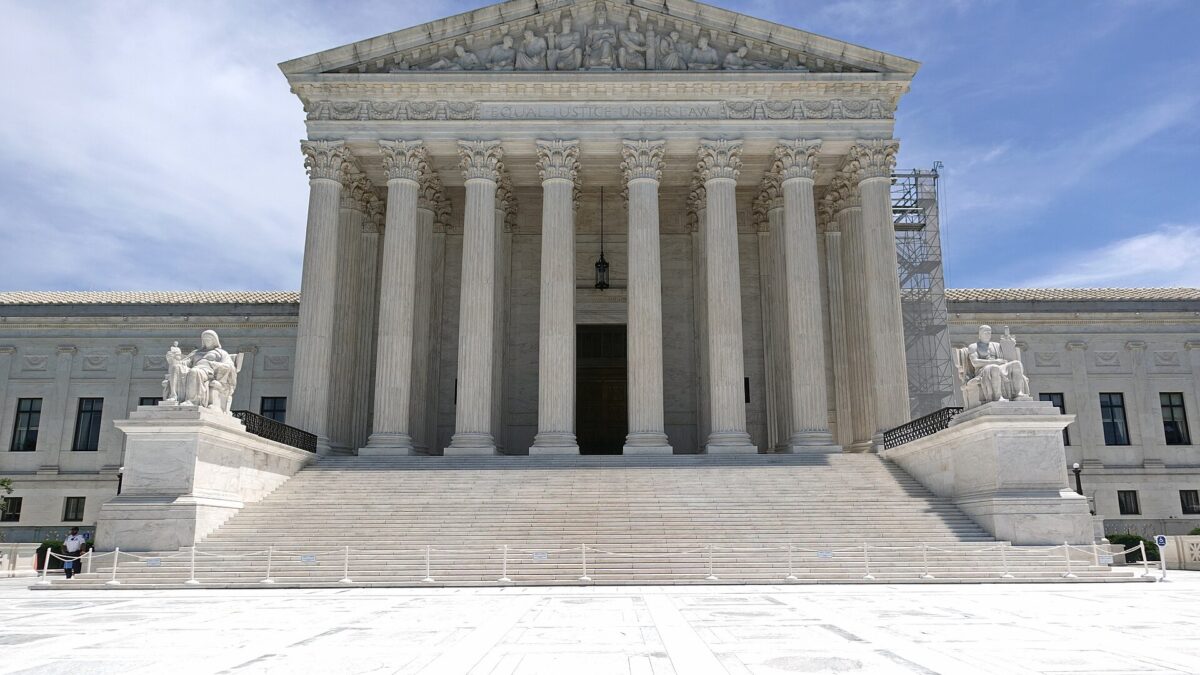
Image: Exterior of the U.S. Supreme Court Building, by 颐园居, CC BY-SA 4.0, via Wikimedia Commons.



Join the conversation