WASHINGTON, Oct. 12 (TodayViralUSA) — President Donald Trump is holding firm on the highest U.S. import duties since the Great Depression even as a majority of Americans say his trade policies have gone too far, posing a political risk with less than a month before the Nov. 3 midterm elections.
More than 64% of U.S. adults say Trump has overreached with his latest tariffs, up from 58% in January, according to recent polling cited in Associated Press reporting. Most adults also disapprove of his overall trade approach, underscoring voter anxiety over prices as Republicans defend competitive House and Senate seats.
Section 301 duties on 60 economies
After the Supreme Court struck down Trump’s earlier use of a 1977 emergency statute in February, the administration shifted to Section 301 of the Trade Act of 1974. That authority lets the president impose tariffs on countries he deems engaged in unfair trade practices, including inadequate enforcement of bans on forced labor.
The current round sets duties of 10% to 12.5% on imports from 60 economies, including major partners such as the European Union, India, Japan, Canada and Mexico. Rates have moved up and down amid legal setbacks and abrupt policy shifts, leaving businesses scrambling to price goods and rework supply chains.
Who pays — and what factories show
Studies from the New York Fed and Harvard have found that foreign exporters have largely not cut prices enough to offset the duties. U.S. importers absorb the cost or pass it to consumers, adding pressure to already elevated grocery and goods prices.
The White House argues a factory rebound is underway. Manufacturing employment, after falling last year, has begun to rise, and nonresidential construction related to new plants is climbing, spokeswoman Taylor Rogers said. “Factory construction jobs of today mean more manufacturing jobs down the road once those factories come online,” she said.
Mainstream trade economists counter that the United States remains the world’s second-largest exporter, shipping $3.4 trillion in goods and services last year, and that broad tariffs disrupt a system that has kept prices lower and U.S. firms competitive globally.
Midterm stakes
Factory-worker backlash over tariffs and related layoffs is already surfacing in competitive races in Kansas, Iowa and Ohio, according to AP reporting from manufacturing communities. Separately, the administration has sought targeted relief on consumer staples, including temporary adjustments aimed at easing ground-beef prices, while still expanding duties elsewhere.
With early voting underway, Trump’s bet that voters will reward toughness on trade faces a clear test: whether anger over prices outweighs the promise of a longer-term industrial revival.
Sources & Credits
- Associated Press / Seattle Times: Trump sticks with tariffs as voters turn against them
- Associated Press: Republicans face midterm backlash from factory workers
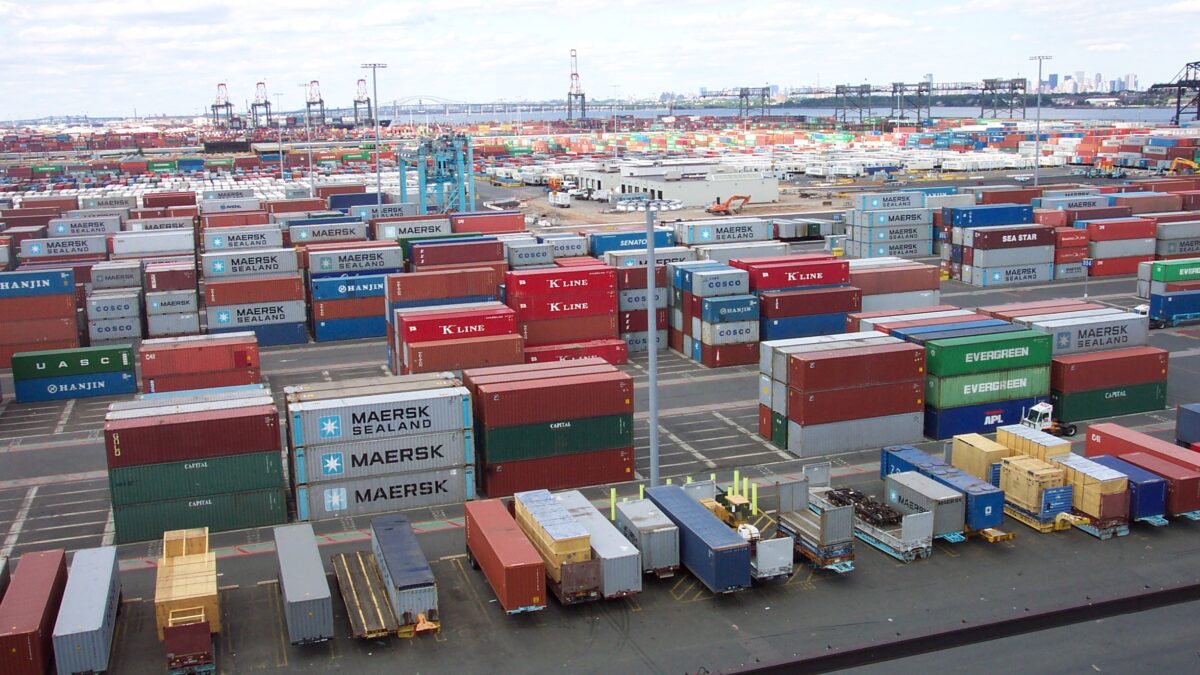
Image: Capt. Albert E. Theberge, NOAA Corps (ret.) (Public domain) via Wikimedia Commons — Shipping containers at Port Elizabeth, New Jersey (file photo).

Join the conversation