Private U.S. data center construction is running at a seasonally adjusted annual rate of $85 billion as of August, up 73% from a year earlier, according to Census Bureau figures analyzed by industry groups — making server halls the dominant technology build in the country as artificial-intelligence demand reshapes the construction market.
Data centers now account for about 11% of all private nonresidential construction spending, up from roughly 4.6% two years ago. The category has overtaken offices, warehouses and chip factories in successive milestones since late 2025, while manufacturing construction overall has fallen sharply from its 2024 peak.
AI capital budgets break ground
Associated Builders and Contractors said data center spending jumped another 7.5% in August and has risen at a 149% annualized pace since March. Economists say the acceleration tracks hyperscaler budget increases for 2026: the four largest tech spenders have guided toward roughly $720 billion to $745 billion in combined capital expenditure this year, much of it for AI-ready facilities, power and cooling.
Census construction figures cover buildings, electrical systems, cooling and site work — not the servers and GPUs inside. Even so, the shell alone has become the fastest-growing slice of private construction. Power infrastructure spending is climbing in parallel as utilities and developers race to feed multi-hundred-megawatt campuses.
Jobs, bills and local pushback
For contractors, electricians and equipment suppliers, work has shifted from semiconductor fabs to server halls that need many of the same trades. Communities hosting new campuses often welcome blue-collar jobs and tax base growth but face higher electricity rates and opposition over water use, noise and grid strain.
In Chicago, a former trading-floor site is being converted into a large data center powered in part by nearby nuclear capacity — one of many adaptive-reuse and greenfield projects stretching from Virginia’s “Data Center Alley” through the Midwest and Texas. Capacity in key grid regions is projected to climb toward 200 gigawatts by the mid-2030s if current pipelines hold.
A construction market of two speeds
While data centers and power projects surge, residential, traditional office and much of manufacturing construction remain soft. Analysts expect the divergence to persist as higher Treasury yields and materials costs squeeze other project types, leaving AI infrastructure as the primary engine of nonresidential growth into 2027.
September Census results are due in early November. Until then, August’s record pace stands as the clearest federal snapshot yet of how generative AI has moved from software headlines into concrete, steel and megawatts across the American landscape.
Sources & Credits
Reporting based on: Yield Theory / U.S. Census Bureau; Engineering News-Record / Associated Builders and Contractors; Tom’s Hardware.
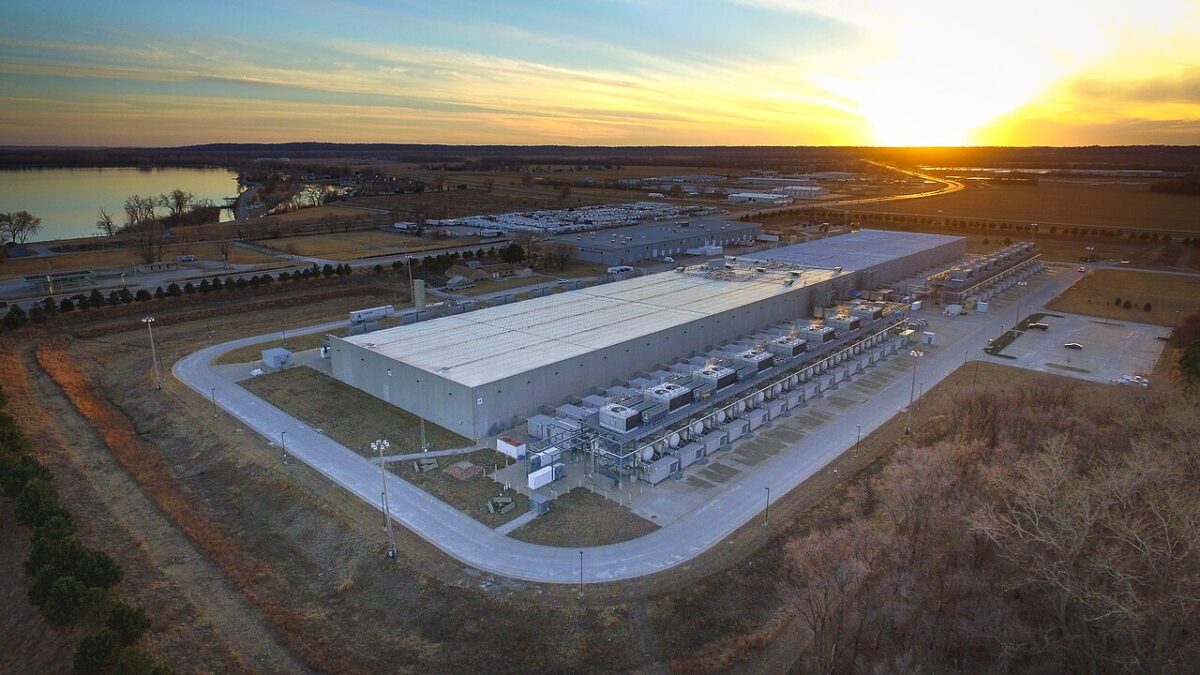
Image: Google Data Center, Council Bluffs, Iowa — Chad Davis / Wikimedia Commons (CC BY 2.0).


Join the conversation