WASHINGTON, Nov. 26 (TodayViralUSA) — The Federal Communications Commission on Wednesday authorized Elon Musk’s SpaceX to deploy as many as one million satellites designed to function as data centers in orbit, a first-of-its-kind approval that the agency framed as a milestone in the artificial intelligence race and that scientists warned could crowd low Earth orbit and brighten the night sky.
The planned constellation, which SpaceX calls “Starmind,” would consist of solar-powered “orbital compute modules” that process large volumes of data for use on Earth. “America is leading the world into the era of super intelligence,” FCC Chairman Brendan Carr said in a statement, adding that the decision “opens a bold new frontier.” Musk welcomed the approval on social media.
A long runway
The FCC’s authorization order requires SpaceX to put at least one authorized space station into service by 2033, then progressively expand the network through 2040. The commission said the constellation complies with its orbital debris rules and that deployment “serves the public interest.” It acknowledged receiving a “substantial number” of public comments and petitions to deny the application, but said it had set aside issues outside its authority, including environmental concerns.
Why put data centers in space?
Supporters argue that tapping continuous sunlight in orbit could relieve strain on power grids and reduce the need for sprawling, water-hungry computing warehouses on the ground. Critics counter that the physics is daunting: although space is cold, it is also a vacuum, which makes shedding the heat generated by powerful chips difficult and costly.
Astrophysicist and author Adam Becker described the plan as “a fantasy,” citing those thermal limits as well as pollution from launches and reentries. He also warned of the risk of “a cascading set of space junk collisions” that could leave a debris cloud in the same orbits used by weather and communications satellites.
Opposition from astronomers and rivals
The American Astronomical Society, satellite operator Viasat and Amazon-owned Kuiper Systems were among those that asked the FCC to reject the application. In a statement, the AAS said it was “disheartened and dismayed” by the decision, warning that the satellites would be larger, brighter and more numerous than existing constellations and would appear “as extremely bright objects for longer periods in the night sky,” undermining decades of investment in astronomical research.
SpaceX already operates the largest satellite fleet in history through its Starlink broadband network. Other technology companies, including Google, have also been exploring the concept of space-based computing as demand for AI processing power surges.
Sources & Credits
- NPR / The Associated Press: FCC says SpaceX can deploy 1 million satellites for data centers in space. Scientists are skeptical
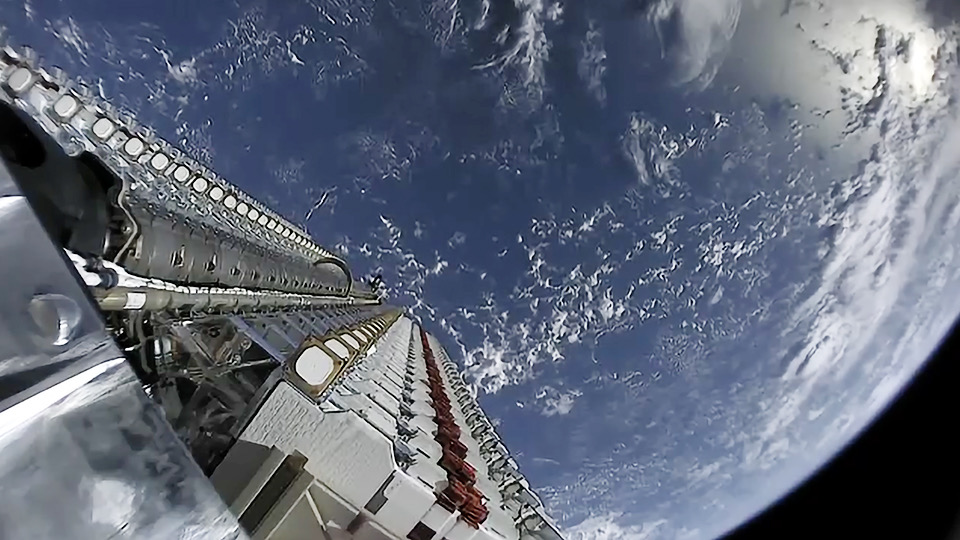
Image: A stack of Starlink satellites before deployment. Photo: Official SpaceX Photos, CC0, via Wikimedia Commons.



Join the conversation