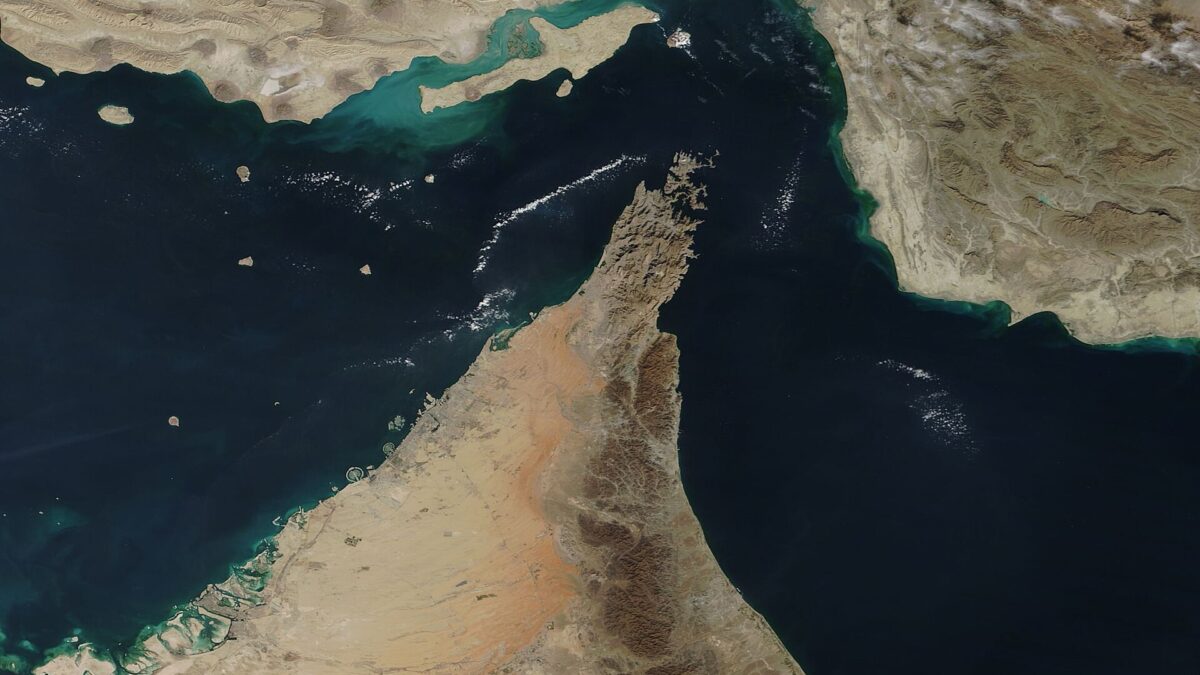
WASHINGTON, Oct. 30 (TodayViralUSA) — Iran’s Revolutionary Guard said Friday that three oil tankers exploded and caught fire after trying to use what it called unauthorized routes through the Strait of Hormuz, the latest escalation in a waterway that has become the front line of a nine-month war and a key driver of energy prices ahead of Tuesday’s U.S. midterm elections.
The Guard’s navy said one of the vessels, a supertanker carrying more than 2 million barrels of crude, struck a naval mine, Iranian state media reported. Iran’s army separately said a fourth tanker had burned east of the strait. Reuters said it could not immediately verify the Iranian statements, and no shipowners or flag states had publicly confirmed all of the incidents.
What has been confirmed
The UK Maritime Trade Operations agency, which tracks shipping security in the region, reported that a small boat attached two explosive devices to a tanker about 25 nautical miles northeast of Khasab, Oman. The blasts set off a fire in the engine room and disabled the ship, the agency said, but the crew was safe. It was not immediately clear who was behind that attack.
Maritime sources told Reuters it was the first known successful strike using limpet mines, explosives fixed to a ship’s hull, in the strait since the U.S.-Israeli war with Iran began in February. Iran also said it had destroyed an unmanned U.S. vessel in the eastern part of the strait; there was no immediate confirmation from the U.S. military.
The incidents came a day after the Guard publicly challenged a U.S. Central Command statement that American forces had cleared mines from the strait’s main transit routes. “Prove the claim that the Strait of Hormuz has been cleared of mines with independent evidence, not a statement,” Guard spokesman Hossein Mohebi said, according to CNBC.
Oil climbs toward wartime highs
Oil prices rose to their highest levels since late April. Brent crude for December delivery was up about 2.5% at $117.75 a barrel in early afternoon trading in New York, after touching $118, while U.S. benchmark West Texas Intermediate gained about 2.7% to $104.79, Reuters reported. Both were on track for a fourth straight monthly gain, with Brent heading for a rise of about 13% in October.
The strait normally carries about a fifth of the world’s energy supplies. More commercial ships have been attacked in October than in any other month of the war, with at least 30 vessels, mostly tankers, hit as of Oct. 27, according to International Maritime Organization data cited by CNBC. Even so, crude exports through Hormuz averaged nearly 11.1 million barrels a day this month, according to the analytics firm Kpler, as shippers turned off transponders and shuttled cargoes to tankers waiting in the Gulf of Oman. Flows fell to about 7.3 million barrels a day in the week ended Wednesday.
That workaround has come at a steep price. Hiring a supertanker for the trip from the Gulf of Oman to Asia cost more than $900,000 a day in early October, up from about $249,000 in early September, shipbroker Braemar told CNBC.
Diplomacy and military planning
The attacks add pressure on two tracks in Washington. Vice President JD Vance sent a letter through Qatari mediators this week to Mohsen Rezaei, head of Iran’s Supreme National Security Council, proposing a framework for talks. President Donald Trump said he had not directed the outreach but told Vance it was “OK.” At the same time, the Wall Street Journal reported that Adm. Brad Cooper, the top U.S. commander in the region, briefed Trump at the White House on military options, amid reports that strikes could resume after the Nov. 3 vote.
In Yemen, Iran-backed Houthi forces said they had carried out six operations against airports and oil facilities in Saudi Arabia. Saudi authorities did not confirm the attacks but said air defenses had intercepted a drone launched toward the Mecca region.
“Continued kinetic action around the Strait of Hormuz amidst doubts of a viable diplomatic pathway is keeping oil prices elevated in expectation of an escalation of the conflict in coming weeks,” said Saul Kavonic, head of energy research at MST Marquee, according to Reuters.
Sources & Credits
- Associated Press: 3 tankers strike mines and catch fire in Strait of Hormuz, and other Mideast news
- Reuters via Al-Monitor: Iran’s IRGC Navy says three tankers catch fire in Strait of Hormuz
- Reuters via Euronext: Oil prices set for fourth straight monthly gains as tanker attack highlights supply risks
- CNBC: Iran claims four tankers struck mines in Hormuz as strike fears grow after U.S. midterms
- CNBC: Tankers defy Iran attacks to keep crude oil flowing through Hormuz
Image: Satellite view of the Strait of Hormuz and the Musandam Peninsula, by the MODIS Land Rapid Response Team, NASA GSFC, public domain, via Wikimedia Commons.
Join the conversation