DUBAI, Nov. 2 (TodayViralUSA) — Iran said Monday it could reopen the Strait of Hormuz within two days and return to nuclear talks with the United States if Washington accepts its conditions, shortening a timetable first set at seven days and nudging oil prices lower.
“The possibility of implementing this plan in two days is another indication of Iran’s good-faith approach,” Foreign Ministry spokesman Esmaeil Baghaei said, adding that messages were being exchanged with the U.S. through mediators and that “everything depends” on Washington meeting Tehran’s demands.
Qatar brokers a shorter timeline
Iran first put forward the plan through Qatar in September, proposing to reopen the strait on the sixth day after the U.S. acted. Foreign Minister Abbas Araghchi told Al Jazeera that Qatari mediators had asked Tehran to compress the schedule: under the new version, Washington would take a package of steps on the first day and shipping would return to normal on the second. Pakistan has also been mediating, according to Reuters.
Iran’s conditions are sweeping. They include an end to the fighting on all fronts, including Israeli strikes in Lebanon; lifting sanctions on Iran’s oil sector and those imposed since August; ending the U.S. naval blockade of Iranian ports; unfreezing Iranian assets abroad; reducing the U.S. military presence in the region; and U.S. acceptance of a new transit route through the strait agreed between Iran and Oman.
Washington in no hurry
The U.S. has not publicly responded. Secretary of State Marco Rubio confirmed the Qatar-led talks were continuing but said he knew of no timeframe, and President Donald Trump said negotiations were going fine but that he was not in a rush, Reuters reported. Iran’s security chief, Mohsen Rezaei, said a letter from Vice President JD Vance reflected a markedly different tone, which he called a positive sign.
Others in Tehran drew red lines. Deputy parliament speaker Ali Nikzad said Iran would not enter nuclear negotiations under pressure. Euronews reported that Trump has kept the option of new strikes open and that Israeli Prime Minister Benjamin Netanyahu has urged him to act right after Tuesday’s U.S. midterm elections.
Oil eases, but risks remain
Brent crude, the global benchmark, traded around $108.50 a barrel on Monday morning, down about 2.8% from Friday, and U.S. West Texas Intermediate fell about 3% to under $100, Euronews reported. Goldman Sachs said a geopolitical risk premium of about $27 a barrel explained most of October’s rally, which briefly lifted Brent to $118, and raised its year-end Brent forecast to $105 from $90.
The strait, which normally carries about a fifth of the world’s oil, has been heavily disrupted since the war began in late February. Analysts cautioned that Monday’s price drop reflects hopes rather than any change in physical supply.
Sources & Credits
- Associated Press: Iran has a 2-day plan to reopen Strait, resume nuclear talks with US
- Euronews: Iran says it can reopen Hormuz in two days if US meets conditions
- Euronews: Oil slides on Hormuz deal hopes but Trump keeps Iran strikes on the table
- CNA: Iran says ready to reopen Hormuz in two days if US agrees to demands
- investingLive (citing Reuters): Oil slips as Iran says Qatar-brokered plan could reopen Hormuz in two days
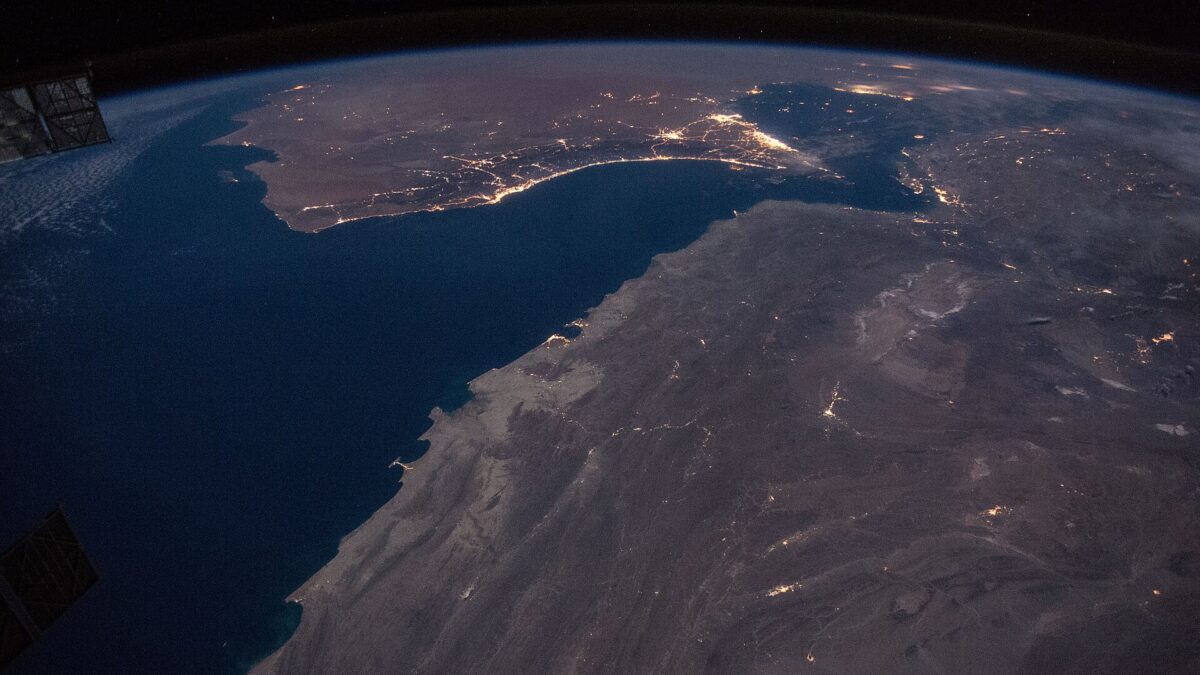
Image: The Gulf of Oman and the Strait of Hormuz at night, photographed from the International Space Station by NASA astronaut Tim Kopra, public domain, via Wikimedia Commons.



Join the conversation