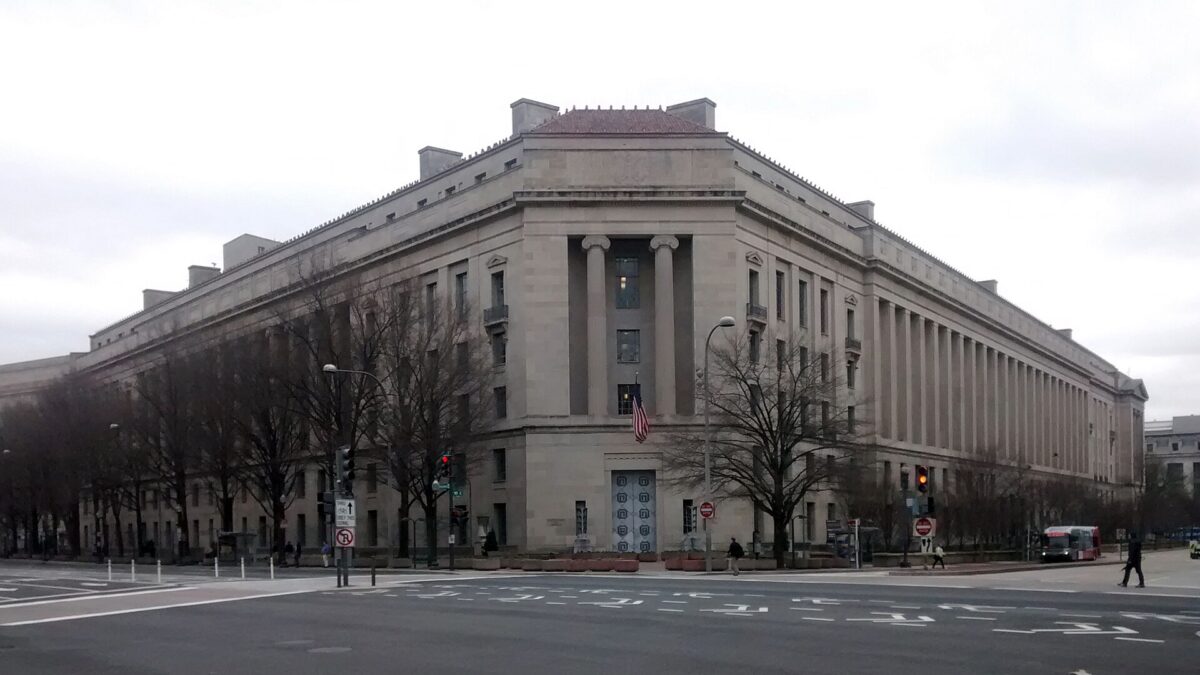
A federal judge has struck down the Justice Department’s nationwide effort to collect states’ voter rolls and screen them against a federal immigration database, ruling that the policy exceeded the department’s legal authority and had already led to U.S. citizens being wrongly removed from the rolls.
In an order dated Oct. 9, U.S. District Judge Sparkle L. Sooknanan of the District of Columbia set aside and vacated what the court called the department’s “Voter List Maintenance Policy,” granting summary judgment to the voting-rights group Common Cause and four voters who sued in April. The decision is an appealable final order. The Justice Department said it was reviewing the ruling.
What the policy did
Under the initiative, the department’s Civil Rights Division requested unredacted statewide voter rolls, shared them with other federal agencies, ran them through the Systematic Alien Verification for Entitlements, or SAVE, database and then pressed states to remove people the system flagged as potential noncitizens. The department sought rolls from 49 states and the District of Columbia; at least 18 states cooperated fully, while 26 refused, prompting federal lawsuits that judges have so far dismissed.
SAVE was built to verify the immigration status of applicants for public benefits. A ProPublica and Texas Tribune analysis earlier this year found it makes persistent errors, particularly for people born abroad who later became citizens.
The court’s findings
Sooknanan concluded that none of the laws the government cited, including the Civil Rights Act of 1960, the National Voter Registration Act and the Help America Vote Act, authorizes the department to collect and share unredacted voter rolls. She also found the policy arbitrary and capricious because the department failed to weigh the risk of relying on citizenship records it knew to be unreliable, and that it violated the Privacy Act and the Paperwork Reduction Act.
“Behind all the window dressing, the challenged policy represents the federal government’s attempt to decide who gets to vote,” the judge wrote. She said the court was vacating “a policy that has removed United States citizens from the voter rolls in their home states and risks disenfranchising many more.”
The ruling also bars the department from continuing to use data it had already obtained. It does not stop states from maintaining their own rolls or from using SAVE voluntarily, and the judge stressed that it does not allow ineligible people to vote.
Voters caught in the screening
All four individual plaintiffs are U.S. citizens whose registrations were canceled after their states turned over voter data. One, Anthony Nel of Denton County, Texas, was told in October 2025 that SAVE had identified him as a noncitizen and that he had 30 days to prove otherwise; his registration was canceled before he could renew an expired passport, though it was later reinstated.
“It’s time the Trump administration stop these desperate attempts to seize voters’ private data and take control of our elections,” Common Cause President and CEO Virginia Kase Solomón said.
The decision lands three weeks before the midterm elections and as the department prepares to deploy roughly 1,000 election monitors nationwide, a plan the NAACP is separately challenging in court.
Sources & Credits
Reporting based on: Courthouse News Service; U.S. District Court order (via ACLU); Memorandum opinion (via CourtListener); Election Newsdesk.
Image: “Robert F. Kennedy Department of Justice Building, Washington DC” by Gunnar Klack, CC BY-SA 4.0, via Wikimedia Commons.

Join the conversation