WASHINGTON, Nov. 5 (TodayViralUSA) — Two days after Democrats swept to control of Congress, the final shape of the new Senate still hinges on two races that remain too close to call: a dead heat in deep-red Mississippi and a tight contest in Alaska that may not be settled until later this month.
Democrats have already flipped seven Republican-held seats and secured a majority of at least 54 seats. Wins in both outstanding races would push their total higher and deepen the scale of Tuesday’s rebuke of President Donald Trump.
Mississippi: a gap of about 1,100 votes
In Mississippi, Democrat Scott Colom, the Lowndes County district attorney, led Republican Sen. Cindy Hyde-Smith by 1,138 votes out of more than 945,000 counted as of Wednesday evening, according to unofficial returns reported by The Associated Press and the Biloxi Sun Herald. Colom had 464,926 votes, or 49.01%, to Hyde-Smith’s 463,788, or 48.89%. Independent Ty Pinkins, the Democrats’ 2024 Senate nominee, drew about 2%.
A Colom victory would be historic. Democrats have not won a U.S. Senate seat in Mississippi since 1982, and Trump carried the state by 22 points in 2024. The state has not sent a Black senator to Washington since the 1870s, The Guardian noted.
Secretary of State Michael Watson said about 3,600 mail-in absentee ballots were still outstanding. Those ballots count if they were postmarked by Election Day and arrive within five business days, by Nov. 10. An unknown number of affidavit ballots, including those from voters who must show photo ID at a clerk’s office by the same deadline, also remain to be processed. The New York Times reported that the final result may not be known until Nov. 10.
Unlike many states, Mississippi has no law providing a mechanism for recounts, so a margin this narrow will not trigger an automatic one.
Both camps projected confidence. “I think we are on the way to Scott Colom being the winner,” Brandon Presley, the party’s 2023 nominee for governor, told the Sun Herald, pointing to outstanding votes in Democratic-leaning Hinds County. Hyde-Smith’s campaign said it was monitoring the count and “remains confident that when every legally cast vote is fully and accurately counted,” voters will have re-elected her.
Alaska: ranked-choice count looms
In Alaska, former Democratic Rep. Mary Peltola held a narrow lead over Republican Sen. Dan Sullivan in preliminary first-choice results, 102,962 votes to 102,325, a margin of 637 votes, the Anchorage Daily News reported. Tens of thousands of early and absentee ballots had yet to be counted.
Because neither candidate has more than 50% of first-choice votes so far, the race is likely to be decided by ranked-choice tabulation, which state officials have scheduled for Nov. 18 after accepting ballots from overseas voters for up to 15 days after the election. Results are set to be certified Nov. 25. A fourth-place candidate who shares the senator’s name, retired teacher Dan J. Sullivan, drew about 1.7% of the vote, and his supporters’ second choices could matter in the final rounds.
Republicans begin assigning blame
As the counts continue, Republicans have started arguing over what went wrong. Vice President JD Vance said in a post on X that “the reason we lost is the war,” referring to the conflict with Iran, while Trump said the war was “part of it” but still justified. Florida Gov. Ron DeSantis called the result “close to an extinction-level event for Republicans,” according to The Guardian.
Sources & Credits
- Biloxi Sun Herald: What’s next in deadlocked U.S. Senate race between Cindy Hyde-Smith, Scott Colom
- The Guardian: Democrats eye historic upset in Mississippi Senate race as Republican blame game begins
- The New York Times: Mississippi U.S. Senate Election Results
- Anchorage Daily News: Early results show Peltola and Sullivan in tight U.S. Senate race
- AP News: Alaskans wait for more votes to come in for Senate, governor’s races
- The Straits Times: US V-P Vance says Iran war is ‘the reason we lost’ midterms
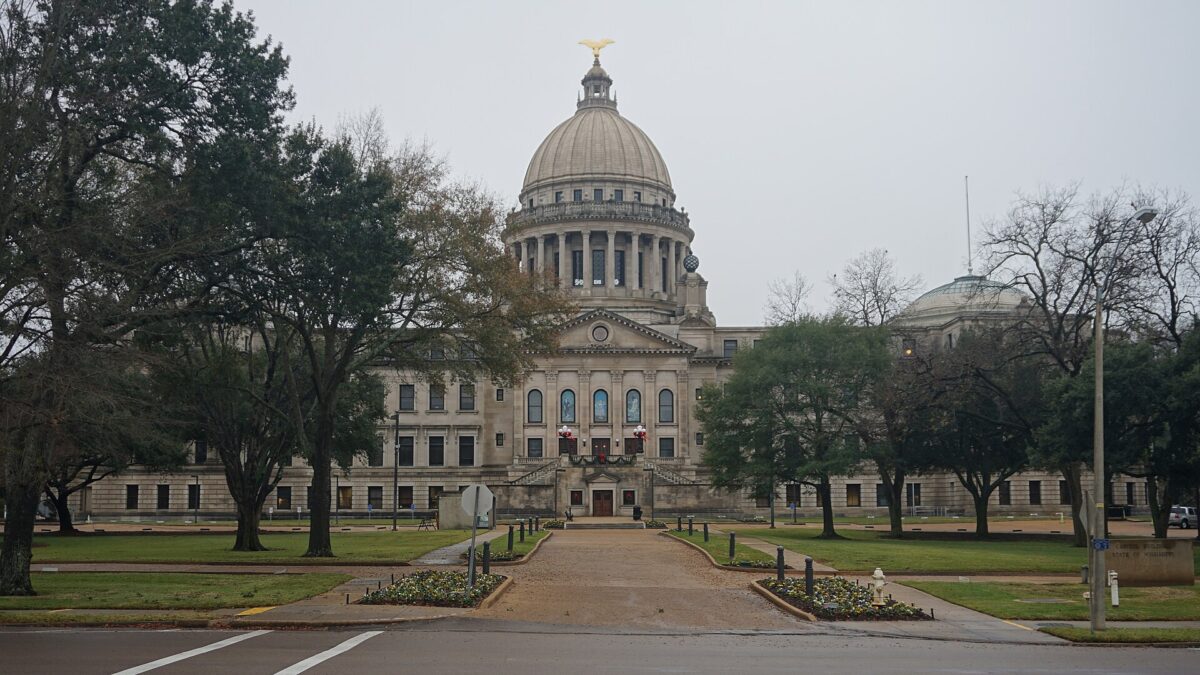
Image: The Mississippi State Capitol in Jackson, December 2018 (file photo), by Michael Barera, CC BY-SA 4.0, via Wikimedia Commons.

Join the conversation