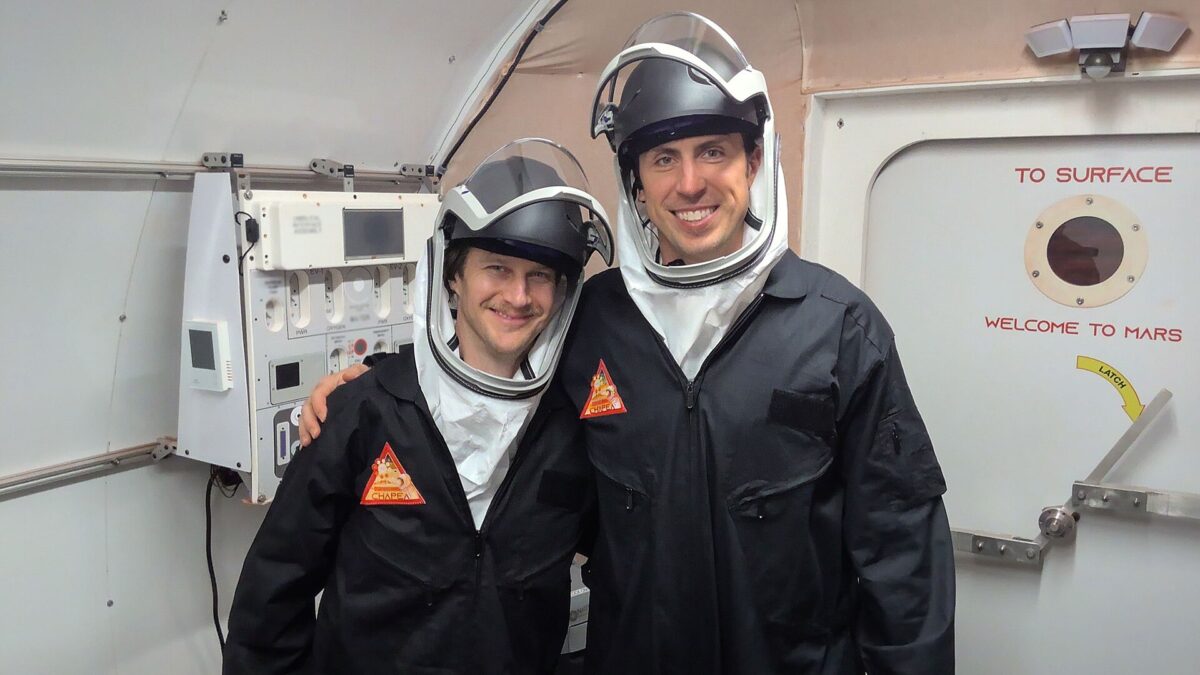
HOUSTON, Oct. 27 (TodayViralUSA) — Four volunteers who have spent more than a year sealed inside a simulated Mars base at NASA’s Johnson Space Center will step outside on Saturday, Oct. 31, ending a 378-day experiment designed to show how future astronauts hold up on long missions far from Earth.
NASA said Tuesday it will stream the crew’s exit from the Crew Health and Performance Exploration Analog, or CHAPEA, habitat live beginning at 3 p.m. EDT on Johnson’s YouTube and social media channels. Johnson Center Director Vanessa Wyche and NASA astronaut Jack Hathaway are scheduled to speak, along with the four crew members.
A year under Mars-like conditions
The second CHAPEA mission began on Oct. 19, 2025. Crew members Ross Elder, Ellen Ellis, James Spicer and Matthew Montgomery have lived and worked inside a 3D-printed, 1,700-square-foot facility built to mimic a Mars outpost.
During their stay they carried out simulated spacewalks, exercised, maintained the habitat and grew plants, all while working under the kinds of stress a real deep-space crew would face: delayed communications with Earth, limited resources and prolonged isolation.
Why NASA runs the test
The agency says the health and performance data gathered during the mission can help it counter the risks of human spaceflight for its Artemis lunar missions and a future Moon base.
Researchers expect the findings to inform the design of food systems, the most efficient use of crew time and how much bandwidth crews need on NASA’s Deep Space Network. The data is also meant to help flight doctors and psychologists refine the medical care and behavioral support that keep crews ready to perform.
The first CHAPEA mission, which also lasted 378 days, ended in July 2024.
Sources & Credits
- NASA: NASA Invites Media to Crew Completion of Yearlong Mars Simulation
- NASA: Crew Health and Performance Exploration Analog (CHAPEA)
- University of Central Florida: UCF Alum ‘Returns to Earth’ After 378-Day Mars Mission
Image: CHAPEA Mission 2 crew members prepare for a simulated spacewalk, by NASA Johnson Space Center, public domain, via Wikimedia Commons.


Join the conversation