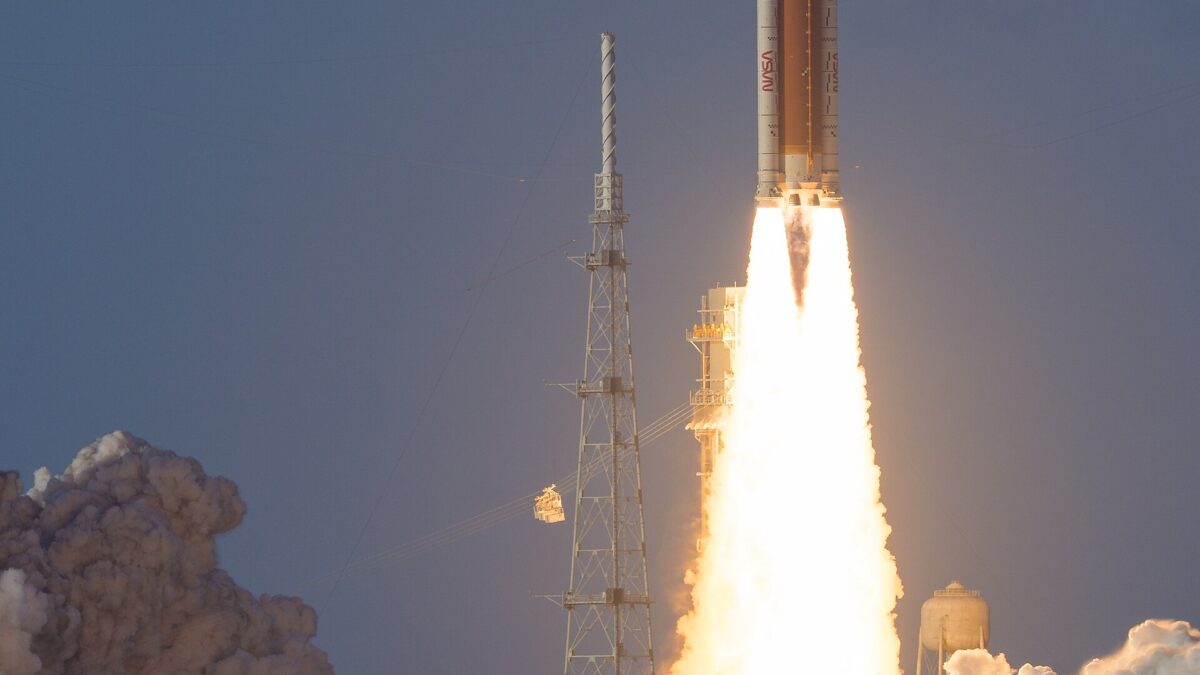
CAPE CANAVERAL, Fla. — NASA launched four astronauts toward the moon on Wednesday, sending a crew beyond low Earth orbit for the first time since Apollo 17 in 1972.
The Space Launch System rocket lifted off from Kennedy Space Center carrying the Orion spacecraft and its crew: NASA astronauts Reid Wiseman, the mission commander, pilot Victor Glover and mission specialist Christina Koch, along with Canadian Space Agency astronaut Jeremy Hansen.
A Diverse Lunar Crew
The Artemis II crew is the most diverse ever to fly toward the moon. Koch is the first woman, Glover the first person of color and Hansen the first non-U.S. citizen to make the journey. As the rocket cleared the tower, Wiseman called out, “Let’s go to the moon!”
Countdown Hurdles Overcome
The launch followed a tense countdown. Hydrogen leaks during a fueling test earlier in the year had forced a lengthy delay, but no significant leaks occurred as the launch team loaded more than 700,000 gallons of propellant into the 32-story rocket.
Engineers then worked through several last-minute technical problems, including faulty battery sensors and an inability to send commands to the rocket’s flight termination system. Both issues were resolved quickly, allowing the launch to proceed.
NASA Administrator Jared Isaacman said at a post-launch news conference that there had been a partial loss of communications about 51 minutes into the flight, when Mission Control’s link with the capsule dropped after switching between tracking and data relay satellites. The problem was fixed by resetting ground equipment.
The Mission Plan
Artemis II is a test flight designed to check Orion’s life support, navigation and communication systems with people aboard before NASA attempts to land astronauts on the lunar surface in a later mission. After separating from the rocket’s upper stage, the crew was scheduled to manually pilot Orion near the spent stage to practice maneuvers that will be needed for future docking operations.
The spacecraft will then fly a free-return trajectory around the far side of the moon, using lunar gravity to swing back toward Earth, before splashing down in the Pacific Ocean. The flight is expected to carry the crew farther from Earth than any humans have traveled.
Political Support
President Donald Trump congratulated NASA and the astronauts on the launch, describing the crew as truly brave people and noting that the mission would travel farther than any crewed spacecraft had flown.
The Road to a Landing
The Artemis program aims to return astronauts to the lunar surface and eventually establish a sustained human presence on and around the moon. NASA has said the lessons from Artemis II will directly inform preparations for a crewed landing, which will depend on commercial lunar landers now in development.
The mission marks the first time the SLS rocket has carried a crew, following an uncrewed test flight, Artemis I, in late 2022.
Sources & Credits
- Daily Mirror: NASA launches Artemis 2 mission with astronauts on their way to Moon
- NASA: Artemis II mission blog
Image: NASA HQ PHOTO, Public domain, via Wikimedia Commons.


Join the conversation