NEW YORK, Nov. 28 (TodayViralUSA) — Some of Nvidia’s most powerful and tightly controlled artificial intelligence hardware has turned up at a sprawling data center in Shanghai with links to Alice Huang, the woman at the center of the controversy that briefly cost Jensen Huang his job as Nvidia’s chief executive, according to a Bloomberg News investigation.
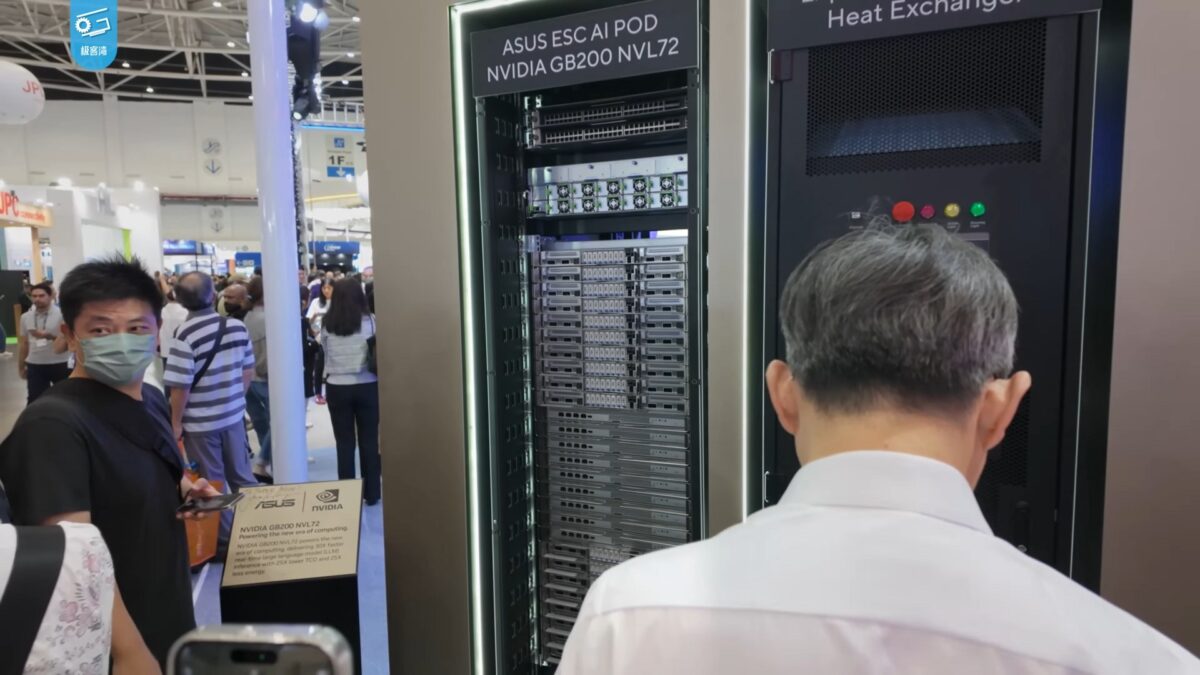
Documents that two Chinese companies submitted to regulators show Nvidia Blackwell-based equipment installed at the Yangtze River Delta Project, a large-scale computing facility in Shanghai. Blackwell systems have always required a U.S. export license to ship to China, and President Trump has said he does not want them sent there.
Server racks pledged as loan collateral
One company, Shanghai Shuoyao, offered a GB300 NVL72 rack — among Nvidia’s most advanced products — as collateral for a 96 million yuan (about $14 million) loan from Shanghai Innovation Bank, Bloomberg reported. A second firm, Shanghai Kezhan, described a GB200 server at the same site in documents tied to a 90 million yuan loan from a finance-leasing company owned by a Shanghai government agency.
A single GB300 NVL72 unit houses 72 Blackwell Ultra GPUs and 36 Nvidia Grace processors and weighs roughly 3,300 pounds. Jensen Huang has previously suggested such racks are too large to smuggle.
By entering a serial number from the filings into a public warranty database, Bloomberg traced the GB300 rack to Taiwan’s Gigabyte Technology, which builds servers using Nvidia chips. Gigabyte declined to say who originally bought the rack, saying it “conducts all business in compliance with applicable laws and regulations.”
The filings also show a separate 200 million yuan loan to Shanghai Longjie, a sister company of Shanghai Shuoyao, secured with servers using Nvidia’s earlier Hopper-generation chips, which are also restricted. That hardware was made by Super Micro Computer and Dell Technologies; it is unclear whether those shipments had U.S. government approval.
The Megaspeed connection
Shanghai Shuoyao has said it is a service provider to Megaspeed, the Singapore-based cloud computing company linked to Alice Huang, describing the relationship as “limited to ordinary commercial cooperation.” The Commerce Department this month added Megaspeed to a U.S. trade blacklist, citing a “significant risk” of its involvement in the diversion of advanced computing products. The Justice Department is also investigating whether the company broke export rules. Megaspeed denies wrongdoing.
Bloomberg said it has no evidence that Megaspeed directly diverted Nvidia chips to the Shanghai facility, though the company used renderings of the project in a 2024 investor presentation that did not disclose its location in China.
Other threads lead back to Alice Huang. Shanghai Kezhan is 83.3% owned by NeXPower Japan, a Tokyo firm that Chinese business outlet Caixin has reported she controls. The facility’s president, Kang Wei, has been described as her partner; The New York Times has reported that he was often introduced as her husband and appears to have had ties to China’s Ministry of State Security.
Pressure builds before Huang’s testimony
The report lands days before Jensen Huang is scheduled to testify publicly before Congress on Dec. 3, amid mounting scrutiny of whether Nvidia’s products have reached China in violation of U.S. export controls. Nvidia did not immediately respond to requests for comment from Engadget and the New York Post.
The Shanghai facility could eventually house as many as 800,000 servers, according to Engadget’s summary of the Bloomberg report.
Sources & Credits
- Bloomberg: Nvidia Blackwell Chips Turn Up at China Site Tied to Alice Huang
- Yahoo Finance: Nvidia Blackwell chips found in Shanghai data center tied to Alice Huang
- Engadget: Restricted NVIDIA chips were installed at a Chinese data center linked to Alice Huang
- New York Post: Banned Nvidia chips uncovered at Chinese data center linked to Megaspeed’s Alice Huang: report
Image: An Nvidia GB200 NVL72 server rack on display at Computex 2024 in Taipei (file photo). Photo: 极客湾Geekerwan, CC BY 3.0, via Wikimedia Commons.
Join the conversation