WASHINGTON, Oct. 16 (TodayViralUSA) — The Trump administration asked a federal appeals court on Friday to strike down the Presidential Records Act in its entirety, pressing the claim that records created in the White House belong to the president rather than the public in a case that could reshape how history is preserved and is widely expected to reach the Supreme Court.
A three-judge panel of the U.S. Court of Appeals for the D.C. Circuit heard the government’s appeal of a lower-court order that requires White House offices to keep complying with the 1978 law. The panel did not immediately rule.
How the dispute began
On April 1, the Justice Department’s Office of Legal Counsel issued an opinion declaring the act unconstitutional and advising President Donald Trump that he “need not further comply” with it. A day later, the White House Counsel’s Office told staff that preserving records was voluntary and instructed them not to keep text messages except in narrow circumstances, according to the groups that sued.
The American Historical Association and the watchdog group American Oversight challenged the move, joined in related litigation by Citizens for Responsibility and Ethics in Washington and the Freedom of the Press Foundation. On May 20, Senior U.S. District Judge John D. Bates, an appointee of President George W. Bush, found the groups were likely to win and ordered the White House Office, the National Security Council, the U.S. DOGE Service and presidential advisers to comply fully with the law, including preserving all records and not using text or ephemeral messaging accounts for official business without copying an official account. He declined to issue an order against the president and vice president personally.
Bates opened his decision with a line from George Orwell’s 1984: “Who controls the past controls the future; who controls the present controls the past.”
The administration’s case
On appeal, the government’s sole argument is that the law is unconstitutional on its face. Administration lawyers say the record-keeping burden intrudes on White House operations and could discourage advisers from giving the president candid advice.
“The Presidential Records Act is unconstitutional and a clear violation of the separation of powers,” White House spokeswoman Lauren Bis told NPR.
Congress passed the act after disputes with Richard Nixon over his papers following the Watergate scandal, ending roughly two centuries in which presidents decided for themselves what to do with documents from their time in office. Every president since has complied with it until this year. The challenge also follows Trump’s indictment, later dismissed, on charges of keeping classified documents at his Mar-a-Lago resort after his first term.
What is at stake
“If the courts were to accept it,” said Nikhel Sus, chief counsel for CREW, “it would mean the people really have no right of access to the president’s papers.”
John Bellinger, who served as legal adviser to the National Security Council under Bush, said future administrations rely on predecessors’ records, which are often the only account of what a president and a foreign leader said to each other. Losing access, he said, would leave future presidents at a “terrible disadvantage.”
Some conservative lawyers argue parts of the law, including Congress’s automatic access to records, raise real constitutional questions. Michael Edney, a former Bush administration official, said the administration appears to want the issue resolved by the Supreme Court “at a time of their choosing” and with its own lawyers arguing it.
Sources & Credits
- NPR: Appeals court to weigh case over who owns presidential records
- American Oversight: Watchdog, historians head to appeals court to defend order blocking Trump’s evasion of Presidential Records Act
- Georgia Public Broadcasting / NPR: Do Americans own the president’s papers? Appeals court to weigh in
- CourtListener: Government brief, American Historical Association v. Trump (D.C. Cir.)
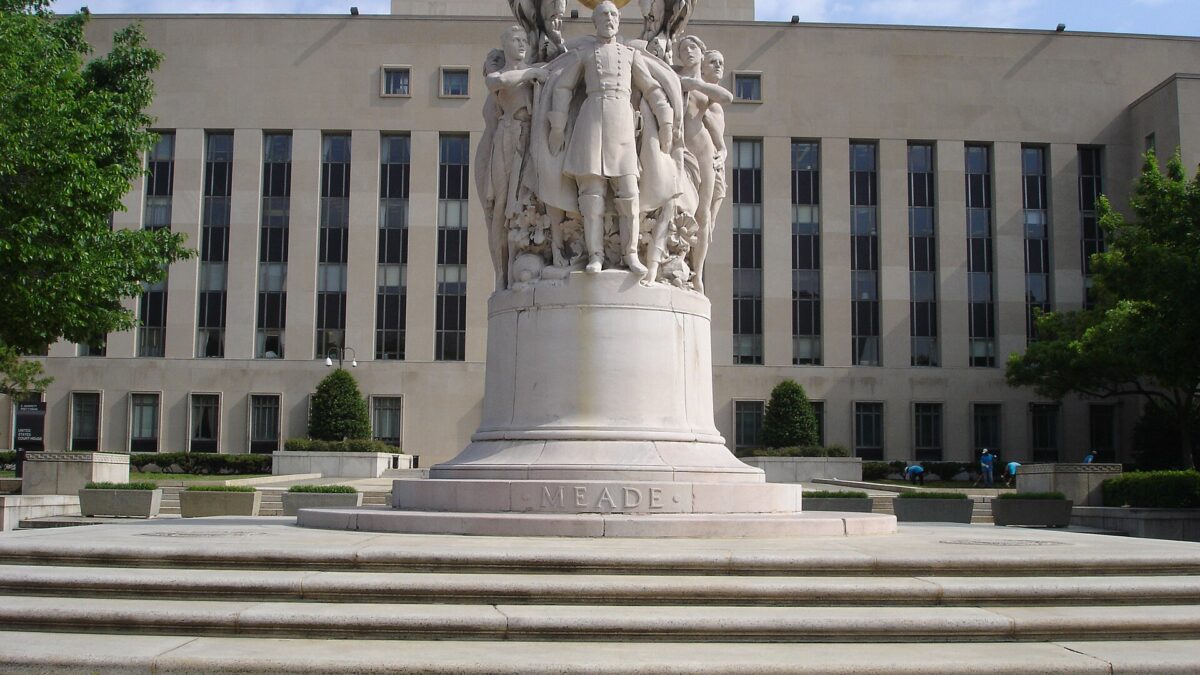
Image: Jorfer, public domain, via Wikimedia Commons (E. Barrett Prettyman U.S. Courthouse).

Join the conversation