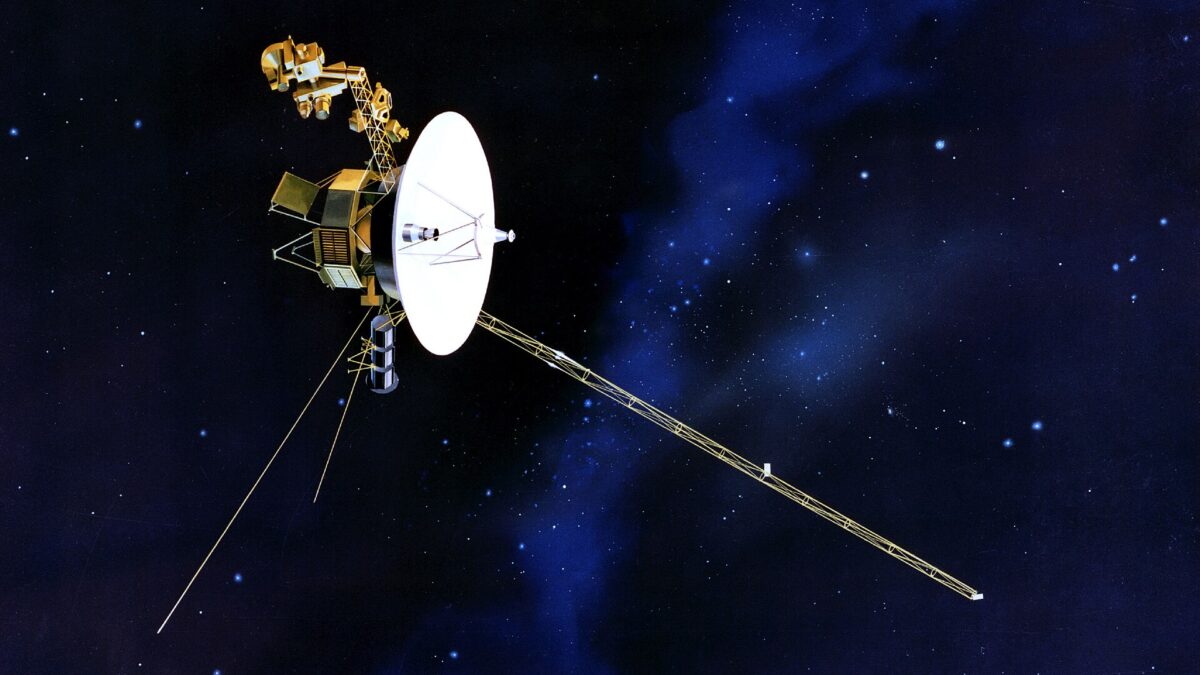
PASADENA, Calif., Nov. 11 (TodayViralUSA) — NASA’s Voyager 1 is days away from becoming the first human-made object to travel one light-day from Earth, and the space agency is inviting people around the world to mark the moment by flashing lights at the night sky.
The spacecraft will cross the milestone at 5:16:07 a.m. EST on Wednesday, Nov. 18, NASA said. At that point it will be about 16.1 billion miles (25.9 billion kilometers) away — the distance light travels in 24 hours — meaning any radio signal from Earth will take a full day to reach it.
Nearly 50 years in the making
Launched from Cape Canaveral on Sept. 5, 1977, Voyager 1 will have taken 49 years, two months and 11 days to reach the mark. It is cruising at nearly 38,000 mph and remains the most distant spacecraft ever built, exploring interstellar space alongside its twin, Voyager 2.
Voyager 2, which took a different route to fly past Uranus and Neptune, is not expected to reach one light-day from Earth until November 2035, according to NASA.
The milestone changes the rhythm of the mission. Engineers at NASA’s Jet Propulsion Laboratory in Southern California will wait a full day for any command to arrive, and another day to learn whether it worked.
‘Shine Bright for Voyager’
NASA is asking the public to join “Shine Bright for Voyager’s Light-Day” after sunset on Tuesday, Nov. 17, by pointing a flashlight or phone skyward and flashing Voyager’s call sign, V-G-R, in Morse code. The agency has created a web-based flasher that does it automatically, with the aim of creating “a symbolic wave of golden light encircling the planet.”
The gesture is symbolic: the spacecraft’s cameras were switched off decades ago, after it captured the famous “Pale Blue Dot” image of Earth.
On Thursday, Nov. 19, JPL will host a discussion with mission team members and NASA leadership on the status of both Voyagers and the challenges of keeping them running, along with a preview of a NASA+ documentary planned for the mission’s 50th anniversary in 2027.
Voyager 1 is headed toward a star called Gliese 445 in the constellation Ursa Minor, which it is expected to pass within about 1.7 light-years of in roughly 40,000 years.
Sources & Credits
- NASA: NASA Invites Media, Public to Join Voyager 1 One-Light Day Activities
- NASA Science: Voyager 1: What Is a Light-Day
- NASA Science: Shine Bright for Voyager’s Light-Day
- The Register: NASA asks Earthlings to wave as Voyager 1 reaches a light-day away
Image: Voyager spacecraft, NASA/JPL, public domain, via Wikimedia Commons.
Join the conversation