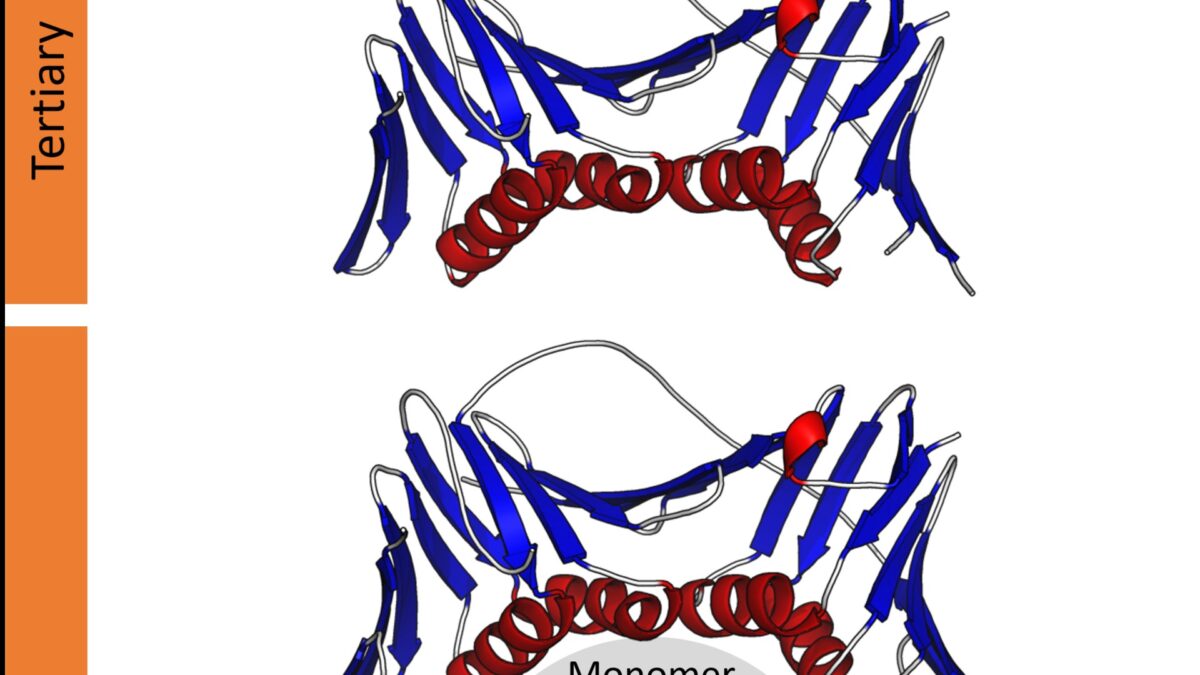
Scientists at the University of Washington’s Baker Lab have used artificial-intelligence design tools to build custom proteases—enzymes that cut other proteins—with enough precision to clip disease-linked sequences tied to Alzheimer’s and other neurological disorders, according to research detailed this week in Nature and covered by Ars Technica.
Peptide bonds that hold amino-acid chains together are extraordinarily stable on their own, lasting hundreds of years in water without a catalyst. Living cells rely on specialized proteases to break those bonds quickly. Nobel laureate David Baker’s group set out to short-circuit evolution by redesigning the catalytic cores of two natural proteases and wrapping them in entirely new protein scaffolds tailored to specific target sequences.
From crayfish and yeast to AI scaffolds
The team started with a zinc protease from a crayfish digestive system and a cysteine protease from yeast, both with known structures and well-mapped active sites. Using RFdiffusion2, researchers generated new backbones that kept the catalytic amino acids in place while accommodating a chosen cleavage sequence. ProteinMPNN then filled those backbones with amino acids compatible with folding and catalysis. AlphaFold3 predictions suggested the resulting designs looked unlike anything already in structural databases.
Laboratory tests showed the approach works more often when designers constrain the chemistry carefully. Cysteine-protease designs succeeded about 19% of the time. For zinc proteases, placing a water molecule in the catalytic site as a design constraint raised the hit rate dramatically—to 35 of 38 designs showing activity—after earlier water-free designs mostly failed.
Activity jumps after fine-tuning
Initial AI designs were usually far less active than the natural enzymes they mimicked. By systematically swapping nearby amino acids that were not part of the catalytic core, the researchers found mutants that accelerated peptide-bond cleavage by factors of roughly 10⁹ to 10¹⁰ while staying specific for the intended sequence. A second-generation zinc protease was about 30 times more active than its first design.
As a proof of concept, the lab redesigned zinc proteases to target proteins associated with Alzheimer’s disease and frontotemporal dementia and showed cleavage of intended targets in cells. Retargeting an existing design to a new sequence worked poorly; starting the AI pipeline from scratch for each new target worked better.
Therapeutic use remains distant. Proteins are hard to deliver, can trigger immune responses, and intracellular targets may require gene delivery so cells make the protease themselves. Still, the papers highlight both the power and the limits of current design software: the tools excel at assembling structures that meet physical constraints, but subtle catalytic details often need laboratory evolution to reach useful activity. Nature published the work under DOIs 10.1038/s41586-026-11143-w and 10.1038/s41586-026-11167-2.
Sources & Credits
Reporting based on: Ars Technica; Nature (DOI 10.1038/s41586-026-11143-w, 10.1038/s41586-026-11167-2); Unite.AI.
Image: “Protein structure (full)” by Thomas Shafee, CC BY 4.0, via Wikimedia Commons.



Join the conversation