ATLANTA, Nov. 2 (TodayViralUSA) — Flu hospital admissions in the United States jumped 27% in a single week and the Centers for Disease Control and Prevention has recorded the first child death of the 2026–27 season, signs of an unusually early start to flu season.
Hospitals reported about 6,100 laboratory-confirmed flu admissions in the week ending Oct. 24, up from 4,811 the week before, according to the CDC’s latest FluView surveillance report. The child’s death occurred in the week ending Oct. 10 and was linked to the H1N1 strain. The agency did not release the child’s age, state or vaccination status.
Earliest rise in years
The national admission rate climbed to 1.8 per 100,000 people, and the share of lab tests coming back positive for flu rose to 7.6% from 5.7% a week earlier. The CDC’s FluSurv-NET network estimated a weekly hospitalization rate of 1.9 to 2.5 per 100,000 once late reports arrive, the highest for that point in the season since 2010–11, Becker’s Hospital Review noted.
The agency still describes national flu activity as low but increasing in many areas, and cautioned that “an earlier increase in activity does not necessarily lead to a higher seasonal peak or greater overall severity.” It estimates the season has already caused at least 1 million illnesses, 16,000 hospitalizations and 900 deaths.
Who is most affected
Adults 65 and older had the highest admission rate, at 5.8 per 100,000, followed by children 4 and younger at 1.8. Emergency department visits for flu rose among children and teenagers. Regionally, the highest admission rate was in the area covering California, Arizona, Nevada and Hawaii.
Nearly all subtyped influenza A samples, 98.9%, were H1N1. The CDC said it is seeing more genetic diversity among circulating H1N1 viruses than it has seen before, though 94.2% of those tested were still well recognized by antibodies to this season’s vaccine strain. “We may have less immunity, not no immunity,” Johns Hopkins virologist Andrew Pekosz told TODAY.
What health officials advise
The CDC recommends an annual flu shot for everyone 6 months and older, noting that protection takes about two weeks to build. Antiviral drugs work best when started within two days of symptoms and matter most for young children, older adults, pregnant people and those with chronic conditions. CDC testing found no resistance to baloxavir and reduced response to oseltamivir, sold as Tamiflu, in only 1.5% of tested H1N1 viruses.
CDC forecasts project weekly admissions will keep rising, with a wide range of 4,800 to 23,200 new admissions for the week ending Nov. 14.
Sources & Credits
- CDC: Weekly US Influenza Surveillance Report, Week 42, ending October 24, 2026
- Medical Daily: Flu hospital admissions jump 27% in one week as CDC records first child death this season
- AAP News: First child flu death reported this season, measles cases continue to increase
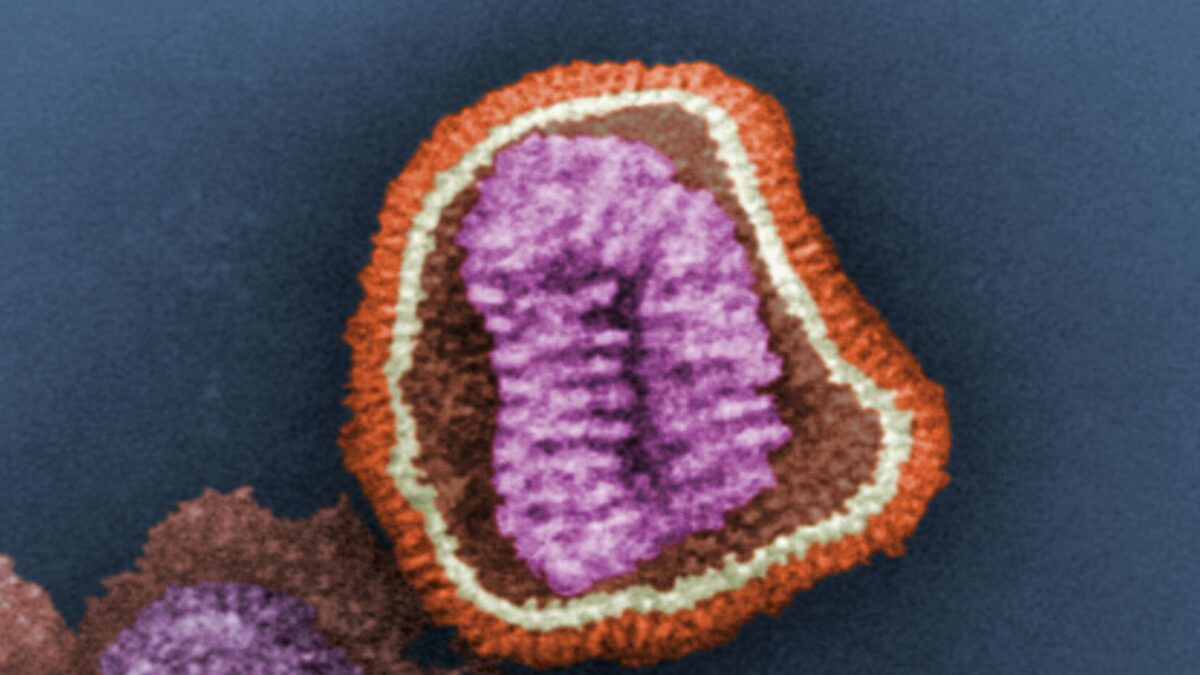
Image: Colorized transmission electron micrograph of an influenza virus particle, by Cynthia Goldsmith, CDC, public domain, via Wikimedia Commons.



Join the conversation