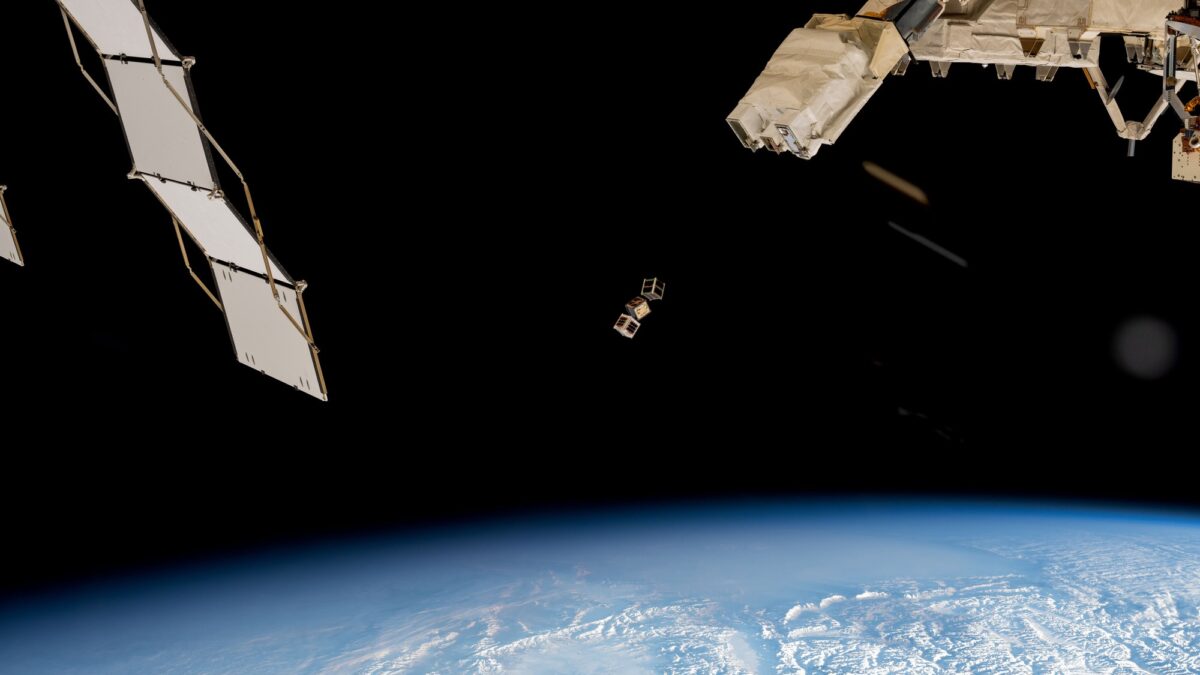
MOUNTAIN VIEW, Calif. — Google said its Project Suncatcher prototype satellite reached orbit and is operating as expected after launching on a SpaceX rideshare mission, opening in-space tests of commercial artificial intelligence chips that could one day support orbital computing.
The refrigerator-sized spacecraft, built with Planet Labs and carrying four Trillium-generation Tensor Processing Units, lifted off from Vandenberg Space Force Base aboard Falcon 9’s Transporter-18 mission on Oct. 1. Travis Beals, Google’s senior director of Paradigms of Intelligence, confirmed first contact the same evening in a company blog post and said the satellite was functioning normally.
Project Suncatcher is a long-horizon research effort to determine whether machine-learning infrastructure can operate from solar-powered satellites. Google published related research in the journal Joule alongside the launch.
Heat, not radiation, is the test
Ground radiation tests at UC Davis had already shown Trillium chips could tolerate doses well above what a multiyear low-Earth-orbit mission would typically accumulate. Engineers say the harder problem in vacuum is cooling: without air, heat must be radiated away through panels and heat pipes.
Tech coverage of the mission said the four TPUs will run Gemini model inference in bursts of about 15 minutes before computation pauses so radiators can shed heat, then the cycle repeats. Solar arrays supply roughly one kilowatt — enough for a single-server-scale experiment, not a full data center.
Google is deliberately flying unmodified commercial silicon rather than radiation-hardened parts, betting that if the chips endure, future TPU generations can follow without a full redesign. A follow-on two-satellite mission planned for 2027 is expected to test laser links between spacecraft.
Economics and competition
Google’s Joule paper argued that near-constant sunlight in a dawn-dusk sun-synchronous orbit could yield far more solar power than ground panels, with no land, water or grid-queue constraints. The same analysis said launch costs would likely need to fall below about $200 per kilogram by the mid-2030s for space compute to approach terrestrial cost parity — a path that assumes a high cadence of heavy-lift flights that has not yet been proven.
Other companies are also chasing orbital AI hardware, including startups flying GPUs and larger constellation proposals from SpaceX and others. Google has described Suncatcher as a decade-scale research moonshot rather than a near-term commercial product. For now, the prototype’s job is narrower: show whether the chips and thermal system survive real orbital cycling.


Join the conversation