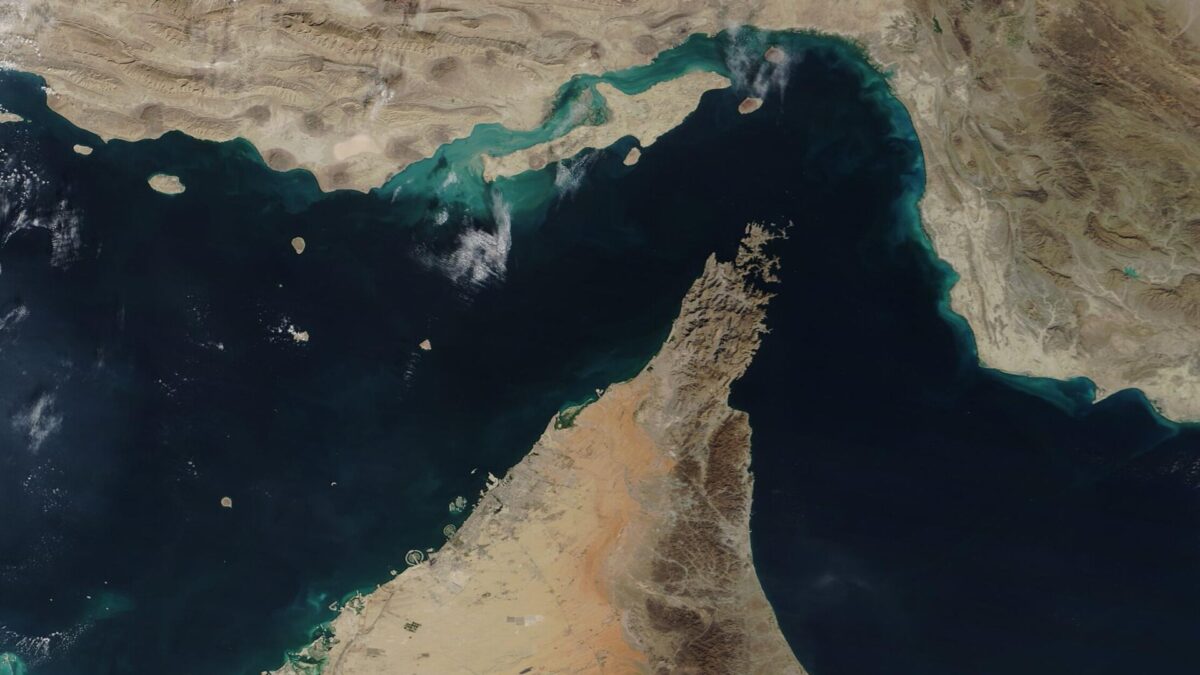
Nov. 21 (TodayViralUSA) — At least three oil tankers were attacked in or near the Strait of Hormuz on Saturday in what appeared to be the latest Iranian strikes on commercial shipping, as Tehran’s Revolutionary Guard unveiled a new missile launcher in a televised show of force aimed at the United States.
The attacks mark a further escalation in Iran’s campaign against traffic through the strategic waterway, which carried nearly a fifth of the world’s crude oil supplies before the war between Iran and the United States and Israel began in late February.
Two tankers hit by projectiles, a third by a mine
The United Kingdom Maritime Trade Operations center, a British military agency that monitors threats to commercial shipping, reported that two tankers were struck separately by projectiles early Saturday while leaving the Persian Gulf through the strait. One vessel was hit in the stern about 20 kilometers (13 miles) north of Khasab, a port on Oman’s northern coast; the other was struck in its engine room about 31 kilometers (20 miles) east of Khasab. No casualties were reported.
Iran’s navy said in a statement carried by state media that a third tanker struck a naval mine in a restricted area east of the strait before noon and caught fire. The navy accused the vessel of ignoring warnings and sailing with its identification and navigation equipment switched off. That account could not be independently verified, and it was not clear whether the burning tanker was one of the ships described by the British agency.
Iranian state media also said the military had carried out its most “intense and varied” operations yet in the strait overnight to stop vessels, describing them as an effort to frustrate U.S. Navy escorts of commercial shipping.
A sharp rise in incidents
Incidents involving tankers have increased markedly in recent days. Al Jazeera’s correspondent in Tehran, citing statements from Iran’s armed forces, said about 25 incidents had been reported since the previous Saturday, an average of roughly three a day.
Iran has said that any ship transiting the strait must coordinate with Iranian authorities and follow lanes it designates, warning that noncompliant vessels risk being attacked or hitting mines laid by its forces. Washington has responded by imposing a blockade on Iranian ports and deploying warships to escort tankers through the narrows. Iran’s attacks on shipping are widely seen as an attempt to drive up global energy prices and pressure the United States to lift that blockade.
New launcher shown underground
Separately, Iranian state television aired footage from an undisclosed underground missile facility, where the Islamic Revolutionary Guard Corps displayed a new launcher it said can fire two liquid-fueled missiles. The system appears to be an advance on an earlier dual launcher that fired two solid-fuel missiles at a time. Liquid fuel is more efficient and gives operators some ability to adjust a missile’s speed and trajectory.
The broadcast was intended to counter past U.S. claims that Iran’s missile program had been destroyed. “Our capabilities have expanded significantly,” said Brig. Gen. Seyyed Majid Mousavi, commander of the Guard’s Aerospace Force, adding that Iran had “integrated ‘surprises’ and highly effective assets into our combat structure.”
Diplomacy at a standstill
The latest attacks come as efforts to end the war remain stalled. President Donald Trump said on Friday that Iran is interested in reaching an agreement with the United States but remains unwilling to accept terms Washington considers acceptable, while Iranian Foreign Minister Abbas Araqchi said Tehran still hopes diplomacy can end the conflict. Earlier this week, Mr. Trump said he would put off a decision on new strikes against Iran until the new year.
For shipping companies and energy markets, the immediate concern is the safety of vessels moving through a channel only about 34 kilometers (21 miles) wide at its narrowest point.
Sources & Credits
- Associated Press: Iran strikes 3 tankers as it shows off missile launchers, and other Mideast news
- Al Jazeera, AFP and Reuters via Yahoo News: Tankers hit in Strait of Hormuz as Iran tightens grip on shipping
- Xinhua: World news summary at 0030 GMT, Nov. 21
- Reuters via Devdiscourse: Reuters World News Summary
Image: The Strait of Hormuz seen from orbit by NASA’s MODIS instrument. MODIS Land Rapid Response Team, NASA GSFC, Public domain, via Wikimedia Commons.


Join the conversation