WASHINGTON, Nov. 21 (TodayViralUSA) — The Senate has passed a sweeping overhaul of federal permitting rules, approving a bipartisan bill that would speed approvals for power plants, transmission lines and other infrastructure while requiring large data centers to cover more of the cost of the grid upgrades they require.
The Bipartisan American Affordability and Jobs Act, known as BAAJA, passed 62-33 late Thursday. Fourteen Democrats and one independent joined most Republicans in support, while two Republicans voted against it. The measure now heads to the House, where its backers hope to see it enacted during the lame-duck session before the new Congress convenes in January.
What the bill would do
The legislation amends the National Environmental Policy Act, the National Historic Preservation Act, the Clean Water Act and the Endangered Species Act. It would impose enforceable deadlines on federal reviews, exempt some infrastructure projects from NEPA review and make it harder for opponents to delay projects through litigation. If a court finds an agency violated NEPA or the historic preservation law, the bill bars the court from halting construction and instead allows it to require the agency to correct its analysis.
For data center developers, the bill would raise the cost of connecting to the power grid by requiring them to pay not only for their share of electricity use but also for the transmission upgrades their demand makes necessary. Independent analyses cited by the bill’s supporters project data centers would contribute about $55 billion toward transmission costs over the next decade.
Policy research firm Rhodium Group has estimated the added power supply could cut annual household electricity bills by $50 to $78 by 2040. The price of a kilowatt-hour has risen more than 6% over the past year and 39% over five years, outpacing overall inflation.
Supporters cite affordability
The bill was written by Sens. Mike Lee, R-Utah; Shelley Moore Capito, R-W.Va.; Martin Heinrich, D-N.M.; and Sheldon Whitehouse, D-R.I. “Tonight, the passage of permitting reform in the Senate finally became reality and we took a major step towards addressing the affordability concerns of the American people,” Capito said.
Senate Majority Leader John Thune said the bill would “cut through decades of red tape,” and Whitehouse said Americans would “quickly begin getting some relief on their energy bills if the House follows suit.” President Donald Trump had urged Congress to approve the measure, calling it a “BIG WIN for U.S. ENERGY INDEPENDENCE and DOMINANCE.”
Lee told the Deseret News that the bill’s ratepayer protections mean household electricity bills “will not go up due to a data center being built.”
Opposition from both parties
Major environmental groups, including the Sierra Club and the National Wildlife Federation, opposed the bill, arguing it weakens environmental accountability. Many Democrats said it would make it easier to approve oil and gas projects and energy-hungry data centers. Sen. Jeff Merkley, D-Ore., called it “a bad deal,” and Sen. Adam Schiff, D-Calif., said it amounted to “oil and gas development masquerading as reform.”
Sen. Josh Hawley, R-Mo., one of the two Republicans who voted no, said the measure was “stuffed with giveaways to data centers and industry at the expense of farmers.” Sens. Maria Cantwell, D-Wash., and Alex Padilla, D-Calif., raised concerns about tribal sovereignty, as tribal advocates criticized a rewrite of the historic preservation law’s consultation process that would set a 30-day comment period.
What comes next
Some Democrats who favor permitting reform have argued that a more environmentally focused bill could be passed after their party takes control of Congress in January. Supporters are pressing the House to act before then.
Sources & Credits
- Associated Press via WABE: Senate passes bipartisan energy bill amid environmental concerns
- Bisnow via Yahoo News: Senate Passes Bill To Speed Up Permitting, Make Data Centers Pay More
- Deseret News: Permitting bill passes through the Senate despite some opposition
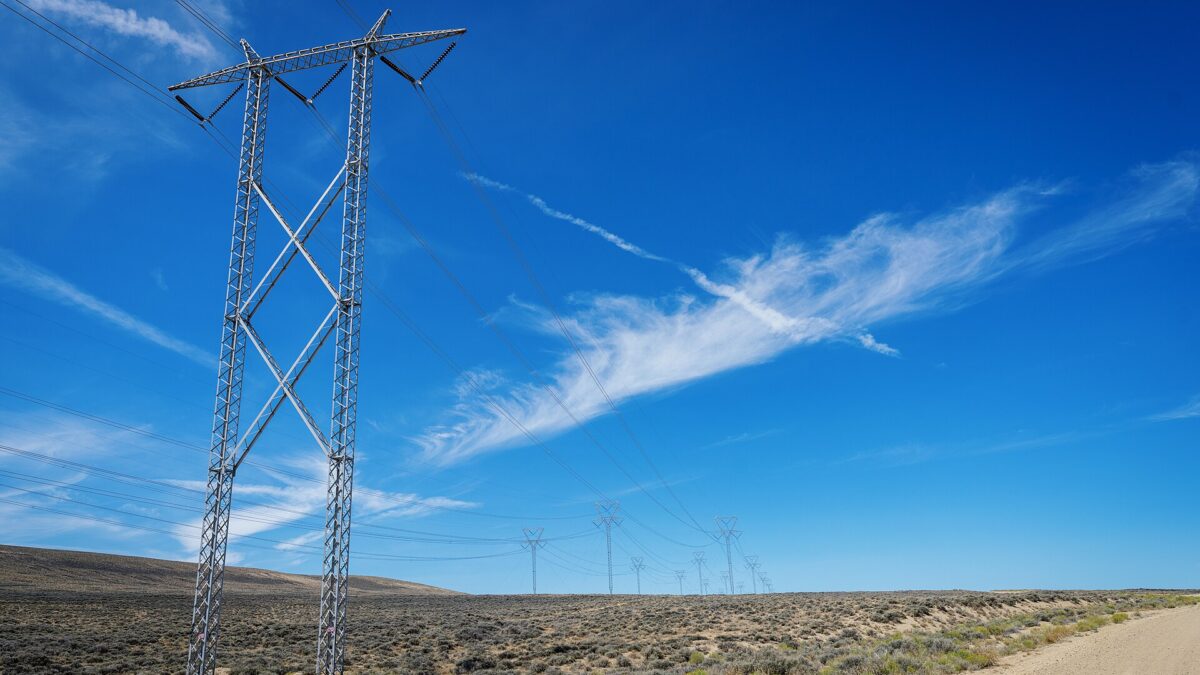
Image: PacifiCorp 345kV power lines near Rock Springs, Wyoming. Tony Webster, CC BY 4.0, via Wikimedia Commons.



Join the conversation