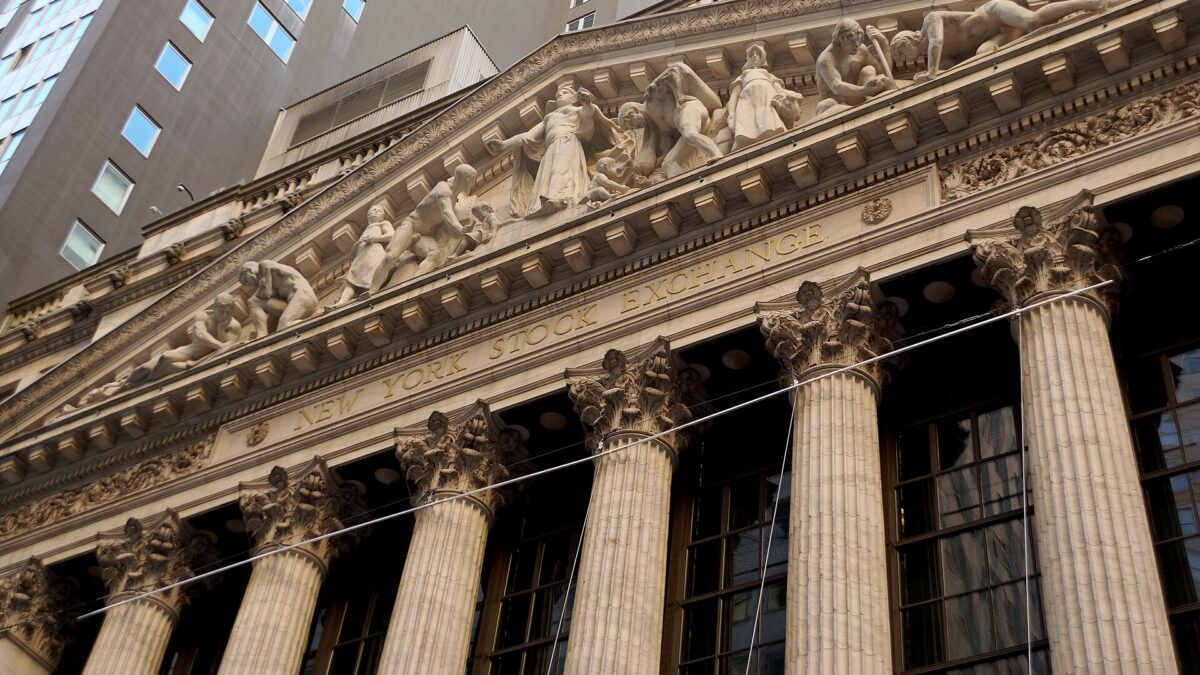
NEW YORK, Nov. 20 (TodayViralUSA) — The sell-off in artificial intelligence stocks turned into a rout on Friday, pushing the S&P 500 and the Dow Jones Industrial Average into correction territory and erasing the Nasdaq Composite’s gains for 2026, as Nvidia plunged on a report that federal regulators are scrutinizing its accounting.
The S&P 500 fell 3.7%, or about 265 points, to close at roughly 6,910, its seventh consecutive decline and its longest losing streak since February 2020. The Nasdaq Composite dropped 5.3% and the Dow lost 1.9%, shedding nearly 950 points to finish near 48,150.
A correction is defined as a decline of at least 10% from a recent record. The broad index is now up less than 1% for the year, NBC News reported.
Tech bears the brunt
The Nasdaq-100, which tracks the largest non-financial companies on the exchange, fell 5.6% and ended 19.8% below its Oct. 6 record, just shy of the 20% threshold that marks a bear market. It had traded beyond that line during the session. The index lost 10.4% this week and is now down 0.9% for 2026, while the S&P 500 and the Dow posted their worst weeks since April 2025, according to StockAnalysis.
Chipmakers led the decline. The PHLX Semiconductor Index fell 10.7%, and the technology sector of the S&P 500 lost 7.1%.
Nvidia hit by SEC report
Nvidia was already under pressure when Reuters reported, citing two people briefed on the matter, that enforcement staff at the Securities and Exchange Commission are examining potential accounting issues at the company. The report did not identify which accounting practices were under review. Nvidia’s shares tumbled about 14% on the day, according to NBC News. The company did not immediately respond to requests for comment.
The report adds to a turbulent stretch for the chipmaker, which lost chief executive Jensen Huang earlier this month and has faced mounting scrutiny in Washington over sales of advanced chips to China.
Anthropic gives back its debut gains
Anthropic, whose record-setting initial public offering on Thursday had been expected to revive enthusiasm for AI stocks, fell about 9% in its second day of trading. The shares remained roughly 7% above the $83 IPO price.
“This is not just a valuation-driven correction. It’s becoming broader,” said Massimo Santicchia, head of U.S. equities at Procyon.
Richard Saperstein, chief investment officer at Treasury Partners, described the decline in a client note as “an AI repricing,” pointing to slowing data center construction, reduced funding for AI projects and slower earnings growth in technology. He said the trend had been “exacerbated by the Nvidia crisis and the Democratic midterm win, which were a one-two punch for the AI story.”
Investors seek safety
Investors moved into government bonds, pushing the yield on the 10-year Treasury note down to 4.94% from 5.05%. Defensive shares held up: the consumer staples sector rose 0.7% and Walmart gained 1.5%.
The Cboe Volatility Index, Wall Street’s so-called fear gauge, closed at 35.9, its first close above 30 since late March.
Analysts said the slide reflects a combination of pressures that have built since early October, including elevated oil prices, rising interest rates and stubborn inflation. Kevin Gordon, head of macroeconomic strategy and research at Charles Schwab, told NBC News that a Federal Reserve signaling aggressive rate increases, combined with the weakness in technology shares, means “we have dual forces hitting the market.”
Gordon added that the bigger risk would come from a prolonged decline. “If you have enough of a protracted downturn, which we really haven’t had since 2007-2009 in terms of length and duration, that’s when you’d really start to worry,” he said.
Sources & Credits
- NBC News: Markets plunge: Nasdaq erases 2026 gains, S&P and Dow enter corrections
- StockAnalysis: Nasdaq 100 plunges 5.6% and closes just short of a bear market as the S&P 500 ends in a correction
- Reuters: Nvidia’s accounting is a focus of US SEC investigation, sources say
- Reuters: Wall St ends sharply lower on AI selloff, S&P 500, Dow in correction
- Bloomberg: Wall Street Regulator Probing Nvidia’s Accounting, Reuters Says
Image: New York Stock Exchange, Broad Street facade. Jakub Hałun, CC BY 4.0, via Wikimedia Commons.


Join the conversation