NIKUMARORO, Kiribati (TodayViralUSA) — Rough seas and high surf have kept a scientific team searching for Amelia Earhart’s lost aircraft off a remote South Pacific atoll for three straight days, forcing the expedition to extend its trip before it can say whether a mysterious object in the island’s lagoon is the aviator’s Lockheed Electra.
The 17-person Taraia Object expedition, a joint effort of the Archaeological Legacy Institute, the Purdue Research Foundation and Purdue University, said the identity of the object will not be known until the team can safely complete at least two more days of fieldwork.
A shape seen from space
The Taraia Object is a visual anomaly in the lagoon of Nikumaroro, an uninhabited atoll in the Republic of Kiribati. It was first noticed on satellite imagery in 2020 and has since been identified on aerial photos of the lagoon dating as far back as 1938, according to Purdue.
The search tests the so-called castaway hypothesis: the theory that Earhart and navigator Fred Noonan landed on the island after vanishing on July 2, 1937, during the third-to-last leg of their attempt to fly around the world. Their planned destination, Howland Island, lies close to 400 miles northwest of Nikumaroro. Supporters of the theory point to radio bearings from Earhart’s transmissions, recorded at the time by the U.S. Navy, the U.S. Coast Guard and Pan American World Airways, that converge on the atoll.
Initial survey complete
Marine archaeologists began the underwater survey on Oct. 14, using a magnetometer to detect ferrous metal, such as steel cabling from the mostly aluminum aircraft, and side-scan sonar to look for objects buried under sediment. That first survey of the research area was completed the same day, and the team also installed a solar-powered system on the island to monitor weather and tides.
Since then, winds of up to about 23 mph, with gusts near 31 mph, have made it unsafe for the crew to board the transport boat from the expedition vessel, the Marin Mainiku, and run the narrow “blasted channel” through the reef to the beach. El Niño conditions in the region have added to the difficulty.
“We know many people around the world are watching and awaiting updates,” said Rick Pettigrew, executive director of the Archaeological Legacy Institute. “Above all, the safety of our team and the ship’s crew is our No. 1 priority.”
What comes next
Once the team can return to the Taraia Peninsula, the second phase of work will use a hydroprobe, which makes direct contact with buried objects to gauge their depth, orientation and surface material, and a water induction dredge to clear sediment so objects found in the survey can be inspected visually.
The forecast for Sunday and Monday local time looked promising, and the ship has enough fuel and food for the longer stay, Purdue said. Nikumaroro is 17 hours ahead of U.S. Eastern time.
Purdue has a direct stake in the mystery: Earhart joined the university in 1935 as a career counselor and adviser in its aeronautics department, and the Purdue Research Foundation funded the Electra, her “Flying Laboratory,” which she intended to return to the school after her flight.
Sources & Credits
- Purdue University News: Earhart expedition update: Weather prevents shore work for third straight day; crew to extend trip
- Purdue University News: Earhart expedition update: Underwater survey of Taraia Object begins
- Fox News: Amelia Earhart search halted at Nikumaroro by rough seas and winds
- National Geographic: Inside the new expedition to find Amelia Earhart’s plane
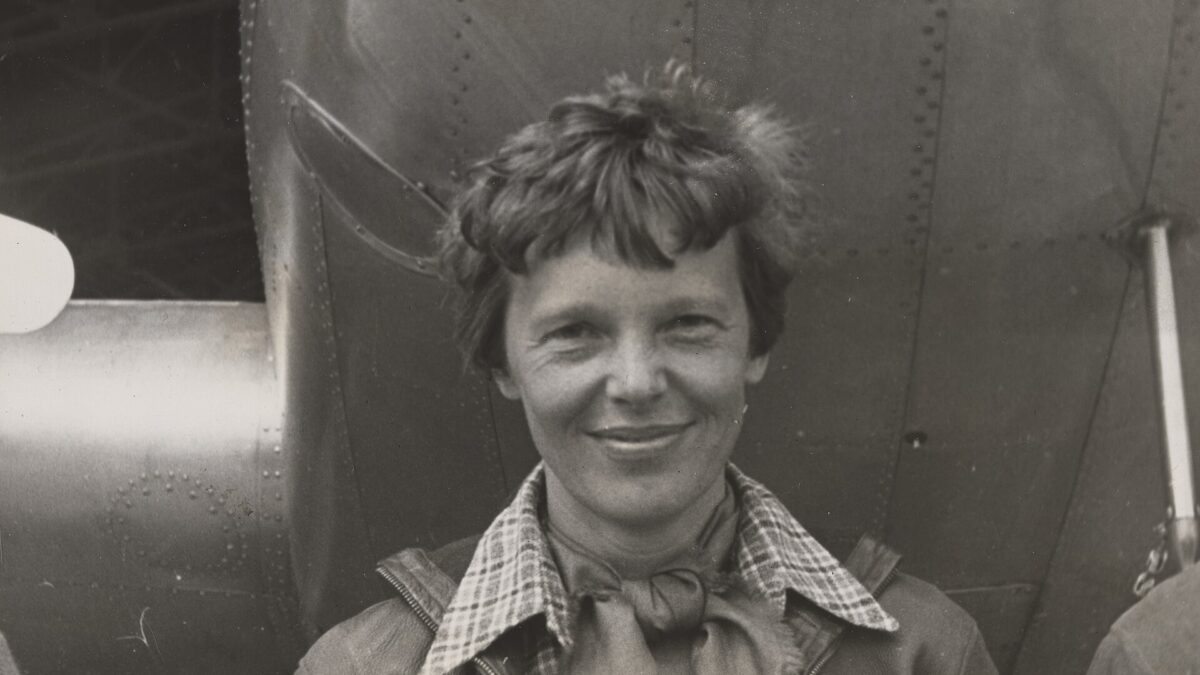
Image: Amelia Earhart beneath the nose of her Lockheed Model 10-E Electra, March 1937, by Underwood & Underwood, Public domain, via Wikimedia Commons.


Join the conversation