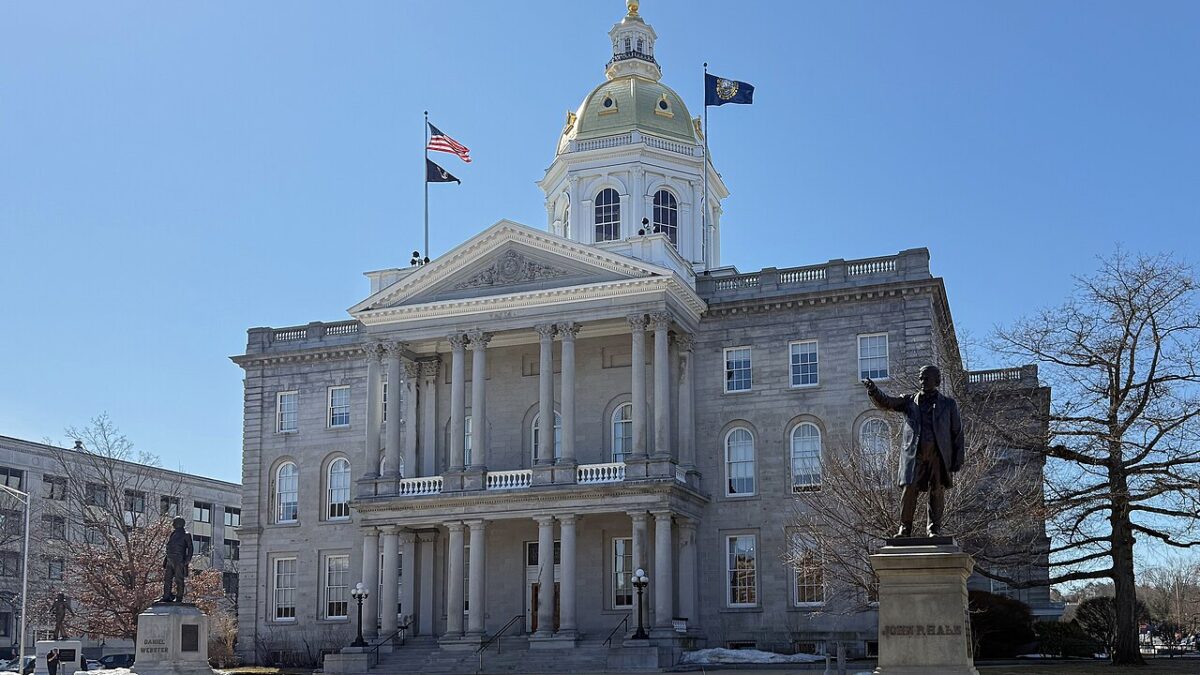
WASHINGTON, Oct. 22 (TodayViralUSA) — The Supreme Court on Thursday cleared the way for New Hampshire to stop voters from using student IDs to prove who they are at the polls in the Nov. 3 midterm elections, siding with state Republican officials in an emergency dispute over the state’s new voter identification rules.
In a short, unsigned order, the justices paused a federal judge’s injunction while the case moves through the U.S. Court of Appeals for the First Circuit. The court cited its long-standing view that “lower federal courts should ordinarily not alter the election rules on the eve of an election,” a doctrine known as the Purcell principle. Justice Ketanji Brown Jackson was the only noted dissent.
What the lower court had ordered
The dispute centers on HB 323, a law passed by New Hampshire legislators in April that took student ID cards off the list of photo identification expressly accepted for obtaining a ballot. It took effect in June.
The Coalition for Open Democracy, a nonprofit that helps high schools run voter-registration drives, sued, arguing the law burdens the right to vote and was designed to disadvantage young voters. Earlier this month, U.S. District Judge Joseph Laplante declined to block the law itself. But he barred the state from enforcing an April directive from Secretary of State David Scanlan to the extent it stopped or discouraged local officials from considering student IDs under a separate “safety-valve” provision, which lets voters without a qualifying photo ID establish their identity by other means, according to SCOTUSblog.
The state, backed by the Republican National Committee, asked the Supreme Court to intervene on Oct. 15.
Jackson’s dissent
In a written dissent, Jackson argued that the Purcell principle did not fit the case because Laplante’s order “left the state election rule untouched.” She wrote that the judge had issued “a targeted order” that was “reasonably designed to address alleged misinformation, not to change the law,” by requiring the secretary of state to bring his public guidance in line with the statute’s text.
A closely watched Senate race
The ruling lands as New Hampshire hosts one of the most competitive Senate contests in the country, with Republican former Sen. John E. Sununu facing Democratic Rep. Chris Pappas for an open seat, NBC News reported. The race could help decide control of the chamber.
The order remains in force until the First Circuit rules and, if either side seeks Supreme Court review, until the justices act on that request.
Sources & Credits
- Supreme Court of the United States: Order and dissent in Scanlan v. Coalition for Open Democracy (No. 26A512)
- SCOTUSblog: Supreme Court allows New Hampshire to restrict use of student IDs in voting
- Associated Press: Supreme Court allows New Hampshire to fully ban student IDs for voting in midterms
- NBC News: Supreme Court says New Hampshire student IDs can’t be used to vote in November
Image: New Hampshire State House, Concord, by Quintin Soloviev, CC BY 4.0, via Wikimedia Commons.



Join the conversation