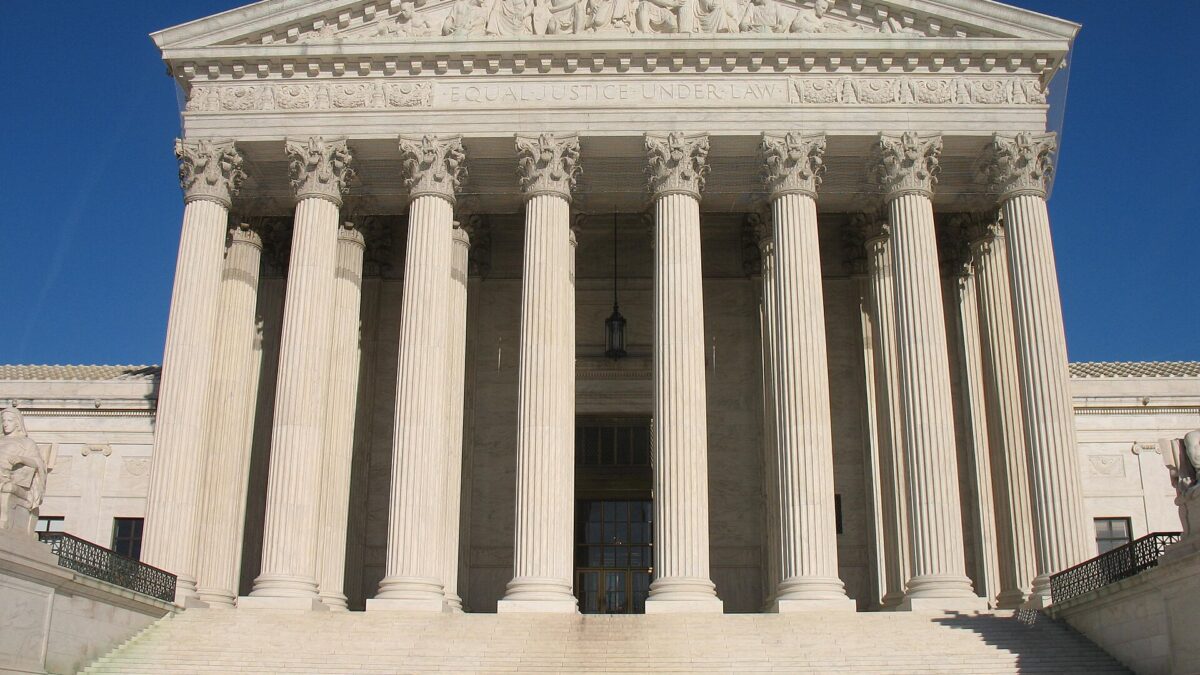
WASHINGTON — The Supreme Court on Tuesday struck down President Donald Trump’s executive order seeking to deny automatic citizenship to many children born on U.S. soil, delivering one of the most significant legal defeats of his second term.
The court ruled 6-3 in Trump v. Barbara that the order, signed Jan. 20, 2025, Trump’s first day back in office, was unlawful. Five justices concluded it violated the Citizenship Clause of the 14th Amendment. Justice Brett Kavanaugh agreed the order could not stand but said it violated federal statute rather than the Constitution.
“The Right to Have Rights”
Writing for the majority, Chief Justice John Roberts said there was “scant evidence” supporting the administration’s reading of the amendment. Children born to parents who are in the country unlawfully or temporarily “satisfy both elements of the Citizenship Clause,” he wrote. “Under the Constitution, they are citizens at birth.”
“Citizenship, then and now, was the right to have rights — to freely participate in our political community,” Roberts wrote, adding that the amendment was ratified after the Civil War to guarantee those rights, including to formerly enslaved people. “We keep that promise today.”
Dissent
Justices Clarence Thomas, Samuel Alito and Neil Gorsuch dissented. In his opinion, Alito called the ruling “one of the most important decisions in the history of the Court” and “a serious mistake,” arguing that the amendment confers citizenship only on children who owe allegiance solely to the United States at birth.
Order Never Took Effect
The 14th Amendment provides that “all persons born or naturalized in the United States, and subject to the jurisdiction thereof, are citizens.” Trump’s order would have limited automatic citizenship to children with at least one parent who is a U.S. citizen or lawful permanent resident. It was scheduled to take effect 30 days after signing but never did, as federal judges across the country blocked enforcement while legal challenges proceeded. Every lower court to consider the question ruled against the administration.
Third Major Loss
The ruling is the third major Supreme Court setback for Trump in recent months, following February’s decision invalidating his emergency tariffs and a ruling a day earlier that prevented him from immediately removing Federal Reserve Governor Lisa Cook. The court has a 6-3 conservative majority, including three justices Trump appointed, and has sided with him in a number of other important cases.
The decision leaves in place a principle that has governed U.S. citizenship for well over a century, including the Supreme Court’s 1898 ruling in United States v. Wong Kim Ark, which held that a child born in San Francisco to Chinese parents was a citizen by birth.
Sources & Credits
- NBC News: Supreme Court rejects Trump's attempt to limit birthright citizenship
- SCOTUSblog: Supreme Court strikes down Trump's order ending birthright citizenship
Image: Photo by Mr. Kjetil Ree., CC BY-SA 3.0, via Wikimedia Commons.
Join the conversation