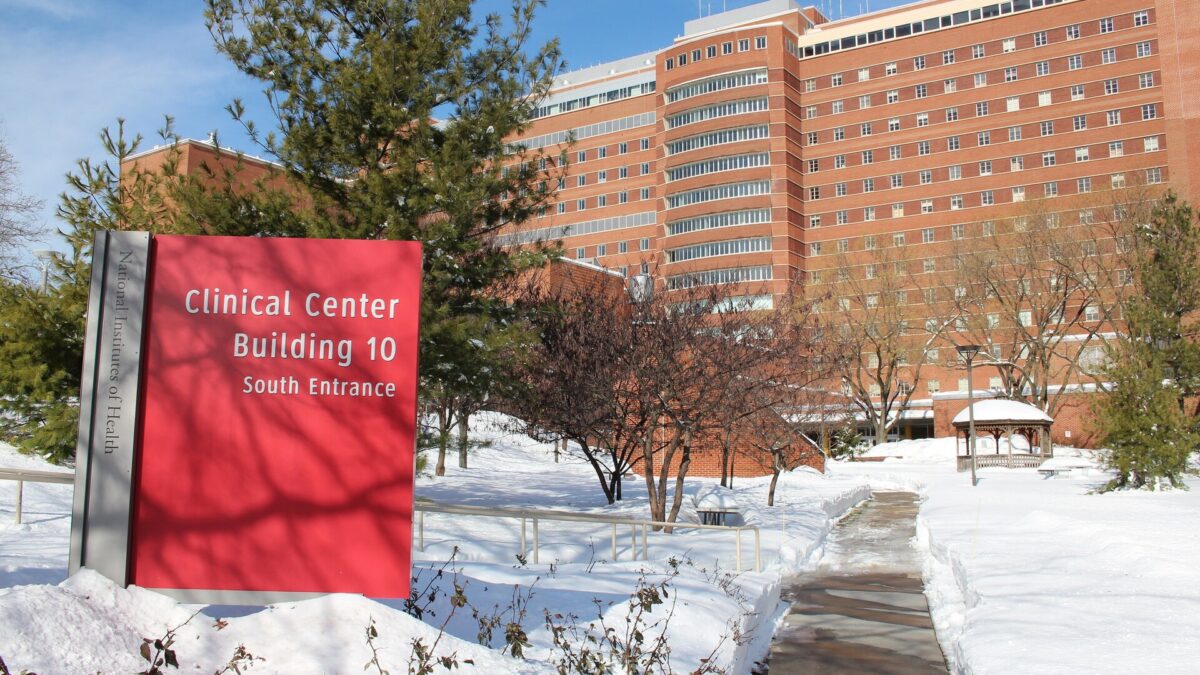
WASHINGTON, Oct. 19 (TodayViralUSA) — President Donald Trump signed an executive order on Monday directing the National Institutes of Health to create a Women’s Health Division within 90 days and setting up a White House task force to coordinate federal policy on women’s health, an initiative first lady Melania Trump pushed for and promoted at a Rose Garden signing.
The order says many conditions that disproportionately or uniquely affect women have not received the research, clinical attention and treatment given to other diseases. It lists heart disease, cancer, stroke, Alzheimer’s disease, autoimmune conditions, osteoporosis, mental health, chronic pain, endometriosis, fibroids, infertility, maternal health and menopause among the areas needing more study.
What the new NIH division will do
The division will sit within an existing NIH institute or center and work alongside the agency’s Office of Research on Women’s Health rather than replacing it, according to the order and a White House official quoted by Reuters. Its mandate includes expanding scientific review of understudied conditions, coordinating research across a woman’s life, increasing the inclusion of women and girls in clinical trials, and speeding the move of discoveries into clinical practice.
The order also directs the division to hold grant recipients accountable for following the NIH policy that requires research to account for sex as a biological variable.
“For generations, women have faced unanswered questions about conditions that uniquely or disproportionately affect them,” Health and Human Services Secretary Robert F. Kennedy Jr. said in a statement reported by Fierce Healthcare. “This new NIH division will confront those questions with gold-standard science.”
A task force led by Kennedy and Wiles
The new White House Women’s Health Task Force will be co-chaired by Kennedy and White House Chief of Staff Susie Wiles. Its members include the secretaries of war, agriculture, labor, education and veterans affairs, along with the heads of the EPA, FDA, CDC, NIH, the Advanced Research Projects Agency for Health and the Centers for Medicare and Medicaid Services. HHS will fund its administrative costs.
The panel is charged with strengthening research on prevention, diagnosis and treatment from childhood through pregnancy, menopause and aging, and with pushing evidence-based findings into medical education and everyday care. It may hold hearings and roundtables with outside experts.
The order revokes two Biden-era actions on the same subject: Executive Order 14120 of March 2024, on advancing women’s health research and innovation, and a November 2023 presidential memorandum that created the White House Initiative on Women’s Health Research.
First lady’s role and the wider backdrop
In her remarks, Melania Trump spoke about using artificial intelligence to speed discoveries in women’s health and about making care more accessible and affordable, Reuters reported. USA Today, which first reported the order, said she had pressed the president on the effort.
The move comes as the administration faces criticism over earlier cuts at NIH, including grants for diversity-related research, and over an ongoing federal safety review of the abortion pill mifepristone that officials have told a court will be finished by March. The Washington Post noted that the announcement arrives as Trump’s support among female voters remains weak ahead of the Nov. 3 midterms.
Sources & Credits
- The White House: Advancing Women’s Health to Improve Outcomes in All Phases of Life (executive order)
- NBC News / Reuters: Trump launches women’s health initiative at National Institutes of Health
- Fierce Healthcare: Trump EO creates new NIH division, White House task force centered on women’s health
- AP News: Melania Trump urges more women’s health research as president signs order
- USA Today: Melania Trump pushed Trump on women’s health overhaul
- The Washington Post: Trump announces women’s health initiative amid weak support from female voters
Image: South entrance of the NIH Clinical Center (Building 10) in Bethesda, Maryland (file photo), by NIH Image Gallery, Public domain, via Wikimedia Commons.
Join the conversation