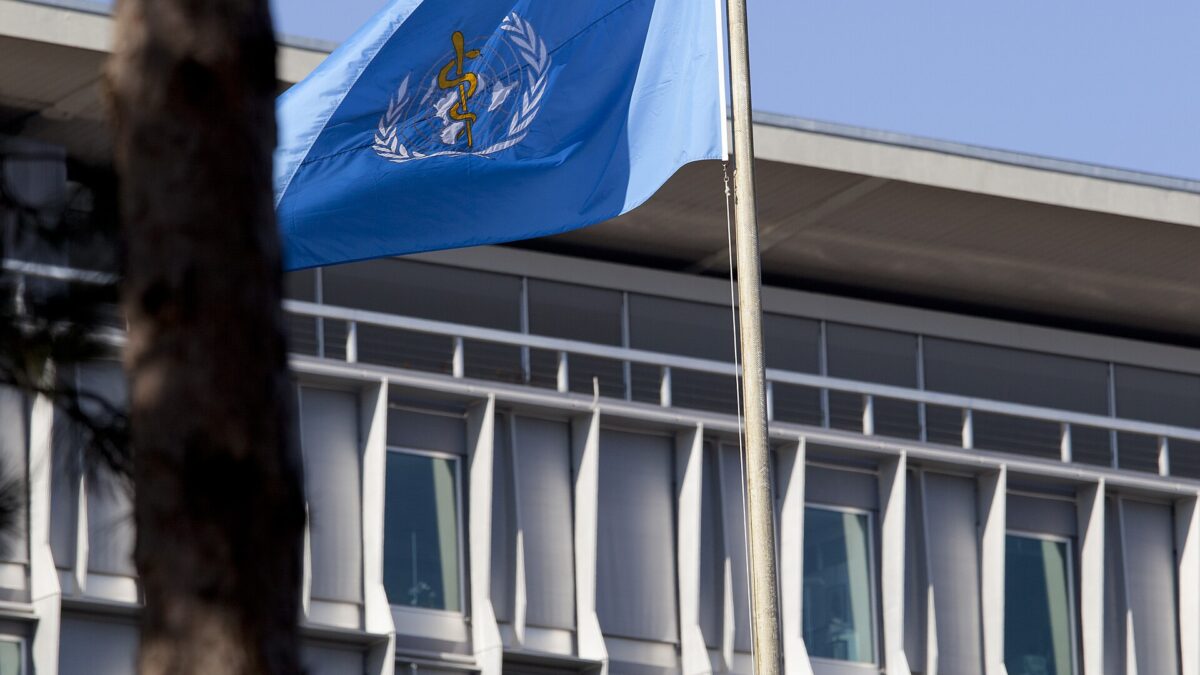
WASHINGTON — The United States on Thursday finalized its withdrawal from the World Health Organization, federal officials said, ending a membership that dated to the agency’s founding in 1948 and exactly one year after President Donald Trump announced the move.
The exit ends U.S. participation in WHO governance, funding and staffing. Remaining engagement is limited to completing the withdrawal, according to the administration.
Why the U.S. Left
In an executive order issued shortly after taking office in January 2025, Trump cited the organization’s handling of the Covid-19 pandemic and other global health crises, its failure to adopt reforms and what he described as its inability to demonstrate independence from political influence by member states.
Administration officials have also objected that no American has ever led the WHO despite the agency’s reliance on U.S. funding and on personnel from the Centers for Disease Control and Prevention. On average, the U.S. paid about $111 million a year in member dues and roughly $570 million in voluntary contributions, according to HHS.
Dispute Over Unpaid Dues
The departure is not entirely clean. According to the WHO, the United States did not pay its dues for 2024 and 2025, leaving a balance of about $280 million. U.S. law required a year’s notice of withdrawal, which was given, and the WHO says outstanding financial obligations must also be paid. An administration official disputed that, saying the United States had no obligation to pay before leaving.
Concerns Over Disease Intelligence
The United States has stopped taking part in WHO committees, leadership bodies and technical working groups, the Associated Press reported. That appears to include the WHO process that assesses circulating influenza strains and guides decisions on updating annual flu vaccines, as well as global flu data sharing.
Lawrence Gostin, a public health law expert at Georgetown University, told the AP the withdrawal would hurt the global response to outbreaks and hamper U.S. scientists and drugmakers developing vaccines and medicines. He called it the most ruinous presidential decision of his lifetime and argued that Trump lacked the authority to withdraw without an act of Congress.
Dr. Ronald Nahass, president of the Infectious Diseases Society of America, called the decision shortsighted and scientifically reckless.
Administration’s Alternative
Officials said the United States already maintains public health relationships with many countries and is working to arrange direct sharing of disease information, rather than relying on the WHO as an intermediary. They did not say how many such agreements are in place. Gostin said he doubted the U.S. could reach agreements with more than a few dozen countries.
Global Programs at Risk
The WHO coordinates international responses to threats such as mpox, Ebola and polio, provides technical support to lower-income countries and sets health guidelines. Experts say the U.S. exit could set back efforts including polio eradication, maternal and child health programs and research into emerging viruses.
Sources & Credits
- Associated Press: US completes withdrawal from World Health Organization
- U.S. Department of State: Joint Statement by Secretary of State Rubio and HHS Secretary Kennedy
Image: United States Mission Geneva, CC BY 2.0, via Wikimedia Commons.

Join the conversation