NEW YORK, Oct. 21 (TodayViralUSA) — The U.S. fertility rate slipped to another record low in 2025, according to new data from the Centers for Disease Control and Prevention, extending a decline that has run for nearly two decades.
For every 1,000 women ages 15 to 44, about 53 gave birth last year, down from nearly 54 in 2024. The CDC’s provisional count put total births at about 3.61 million, roughly 1% fewer than the year before.
Younger women driving the drop
Birth rates fell among women under 30 but rose among women ages 30 to 44, the data show. The teen birth rate dropped 7% to 11.7 births per 1,000 girls and young women ages 15 to 19, another all-time low and down about 72% since 2007.
Overall, the general fertility rate has fallen about 23% since 2007, according to the CDC’s provisional report. A century ago, the U.S. rate was roughly double what it is today, NBC News noted.
Good news or bad news?
Many population researchers say the trend largely reflects fewer unintended teen pregnancies and more women waiting until they have finished school or built careers before starting families. “People are able to avoid having kids at points in their life when they don’t feel it’s the right time,” Karen Benjamin Guzzo, director of the Carolina Population Center at the University of North Carolina at Chapel Hill, told NBC News.
Others warn of longer-term strain. A shrinking pool of younger workers could mean fewer people to support and care for an aging population, a concern raised by public health researchers and by some conservative politicians who see falling birth rates as an economic and national security risk.
Political push for more births
President Donald Trump has said he wants to spark a new “baby boom,” and his administration has weighed proposals such as $5,000 “baby bonuses” for new mothers. Researchers say cost remains a major obstacle for many families who want children, with estimates of the expense of raising a child in the U.S. now topping $300,000.
Other health indicators in the CDC data were mixed. The cesarean delivery rate rose to 32.5%, its highest since 2013, while the preterm birth rate held steady at 10.41%.
Sources & Credits
- NBC News: The U.S. fertility rate has hit another record low, CDC finds. Is that good or bad?
- CDC National Center for Health Statistics: Births: Provisional Data for 2025
- The Independent: The US fertility rate has hit another record low despite MAGA calls for a ‘baby boom’
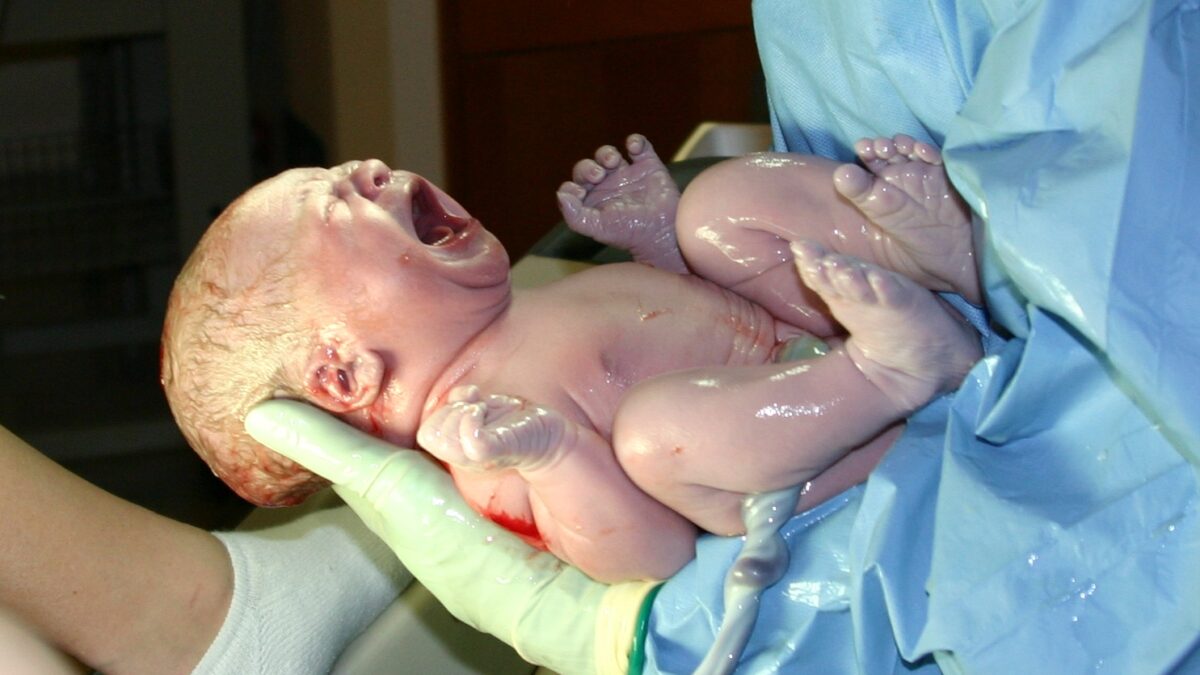
Image: A newborn baby (file photo), by Ernest F, CC BY-SA 3.0, via Wikimedia Commons.


Join the conversation