
WASHINGTON, Nov. 16 (TodayViralUSA) — The Trump administration on Monday moved to shut a loophole that has let Chinese companies tap advanced American AI chips through data centers in other countries, issuing a new rule just as President Trump left for a summit in China and as fallout from the Nvidia scandal continued to spread through Washington.
What the rule does
The rule from the Commerce Department’s Bureau of Industry and Security requires overseas data centers that provide a significant volume of computing power to companies headquartered in China to obtain U.S. export licenses within 90 days, or face future export restrictions, Reuters reported. Systems used by online retailers and social media companies are exempt.
It also requires companies in Singapore, Thailand, Malaysia, Indonesia and Brazil to apply for licenses for advanced chips, citing a higher-than-normal risk that the hardware could be diverted to China.
The department said the measure was meant “to ensure that existing restrictions on access to sensitive American technology cannot be circumvented through remote computing arrangements involving data centers in third countries.” According to Reuters, the department said the rule was written by the Treasury Department and the National Security Council, which also directed its release.
The regulation formally rescinds the Biden administration’s January 2025 framework for global AI chip distribution, which the Trump Commerce Department said in May 2025 it would not enforce and would replace.
The Nvidia backdrop
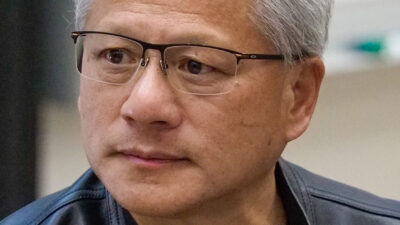
The move follows the resignation last week of Nvidia chief executive Jensen Huang after he admitted to an affair with an executive linked to Megaspeed International, a Singapore-based Nvidia partner that rents computing power from data centers, including in Malaysia, and has come under scrutiny over possible diversion of chips to China. NPR reported that U.S. intelligence officials suspected the woman of being a Chinese intelligence operative. Megaspeed has said it complies with all applicable laws, including U.S. export controls.
Commerce Secretary Howard Lutnick has faced criticism from lawmakers and from Treasury Secretary Scott Bessent, who said Friday that four agencies had favored blacklisting Megaspeed but that Commerce had not acted. Trump said Monday that he still has confidence in Lutnick, who is traveling with him to Asia, and that he would not mind seeing Huang return as Nvidia’s CEO.
“The pendulum is swinging in the other direction — towards tighter export controls.”
— Kate Koren, former Commerce Department official, to Reuters
What comes next
Trump is due to meet Chinese President Xi Jinping in Shenzhen on Thursday on the sidelines of the APEC summit. Rep. Yvette Clarke, D-N.Y., told NPR that Democrats expect to investigate the matter further when they take control of Congress in January.
Sources & Credits
- Reuters via The Journal Record: Trump administration tightens AI chip exports to curb China access
- NPR: U.S. tightens controls on remote access to AI technology amid Nvidia fallout
- Bureau of Industry and Security: BIS press release on remote access rule
Image: The Herbert C. Hoover Building, U.S. Commerce Department headquarters, Washington. Photo by Tony Webster, licensed under CC BY 2.0, via Wikimedia Commons.


Join the conversation