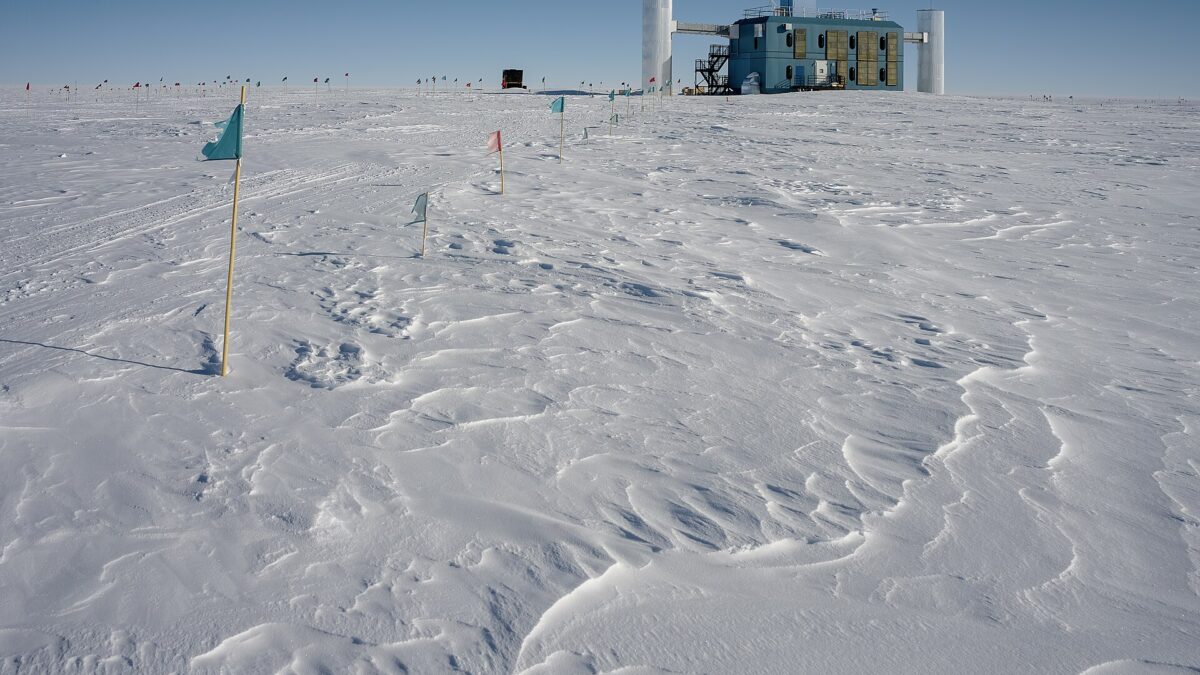
STOCKHOLM, Oct. 6 (TodayViralUSA) — Francis Halzen, a physicist at the University of Wisconsin–Madison, has been awarded the 2026 Nobel Prize in Physics for his leading role in building the IceCube Neutrino Observatory at the South Pole and for the discovery of high-energy neutrinos from beyond our solar system.
The Royal Swedish Academy of Sciences honored Halzen “for decisive contributions to the IceCube Neutrino Observatory and the discovery of high-energy neutrinos of astrophysical origin.” He is the sole recipient, the first time the physics prize has gone to a single laureate since 1992, Scientific American noted.
“It was a great surprise, and I obviously didn’t expect it,” Halzen said by phone from Italy during the academy’s news conference, crediting the “large collaboration” of researchers and engineers behind the project, Ars Technica reported.
A telescope made of ice
Neutrinos are nearly massless subatomic particles that rarely interact with matter, passing through planets and people almost entirely unnoticed. That makes them extremely hard to detect, but also valuable messengers: because they travel largely undisturbed, they carry information from the most violent processes in the universe.
Halzen, born in Belgium in 1944, proposed in 1988 that the clear, deep ice beneath the South Pole could serve as a detector. Building on an earlier prototype called AMANDA, his team used hot-water drills to bore holes about a kilometer deep and lowered strings of light sensors into them. Completed in 2011, IceCube spans a full cubic kilometer of ice with 5,160 sensors on 86 cables, which record faint flashes of blue light produced when a neutrino collides with an atom.
Opening a new kind of astronomy
The observatory detected its first high-energy neutrinos from outside the solar system within about two years of completion. In 2017, researchers traced one to a distant galaxy known as TXS 0506+056, and in 2022 the collaboration reported evidence that the active galaxy Messier 77 emits such particles.
“His tenacity and scientific vision has paved the way for a new kind of astronomy,” said Mark Pearce, chair of the Nobel Committee for Physics.
IceCube completed an upgrade in February that added more sensor strings, and the National Science Foundation last month committed $53 million over five years to keep it running, Ars Technica reported. Scientific American noted that the administration’s 2027 budget proposal calls for halving the observatory’s funding.
The prize, worth 12 million Swedish kronor, will be presented in Stockholm on Dec. 10.
Sources & Credits
- NobelPrize.org: Press release: The Nobel Prize in Physics 2026
- Ars Technica: Neutrino physicist wins 2026 Nobel Physics Prize
- Scientific American: 2026 Nobel Prize in Physics awarded to Francis Halzen, pioneer of high-energy neutrinos
- AFP: Nobel physics prize hails ‘ghostly messengers’ from space
Image: Christopher Michel, CC BY-SA 4.0, via Wikimedia Commons.


Join the conversation