ATLANTA, Nov. 12 (TodayViralUSA) — The American Cancer Society now recommends that men get regular PSA blood tests to screen for prostate cancer, a significant shift from guidance that for 16 years stopped short of telling men to be tested and instead urged them to decide with their doctors.
Under the updated guideline, released Thursday and published in the society’s journal CA: A Cancer Journal for Clinicians, men at average risk should have a PSA-based screening test every two years from age 50 through 69. Black men and men with a strong family history of the disease should start earlier, at 45, and be tested every year.
Why the change
The society said evidence gathered since its previous guideline in 2010 shows more clearly that PSA screening significantly reduces deaths from prostate cancer and diagnoses of advanced disease. At the same time, doctors now have better tools to limit the harms that made screening controversial, such as unnecessary biopsies and aggressive treatment of slow-growing tumors that might never have threatened a patient’s life.
“PSA testing remains the cornerstone of detecting prostate cancer early, and we now have stronger evidence of its benefits,” said Dr. Robert Smith, who directs the society’s Center for Early Cancer Detection and is senior author of the report. “The PSA test is just the first step in a screening process.”
What the guideline says
- Average risk: PSA testing every two years, ages 50 to 69.
- High risk: annual testing from 45 to 69 for Black men and for men with a first-degree relative diagnosed before 65 or several first-degree relatives diagnosed at any age.
- Single older relative: non-Black men with one first-degree relative diagnosed at 65 or older should be tested every two years from 45.
- Ages 70 to 74: an individual decision with a clinician, since the balance of benefits and harms is less certain.
- 75 and older: screening is not recommended, though some very healthy men 75 to 79 with rising PSA levels may discuss continuing. It is not recommended at 80 or older, or for men not expected to live another 10 years.
After an abnormal result
A high reading does not automatically mean cancer or a biopsy. The guideline calls for repeating the test within two weeks to three months for men whose PSA is 3.0 ng/mL or higher (6.5 or higher for men 70 to 74). If it stays elevated, men should be offered an MRI or a validated biomarker test to help decide whether a biopsy is needed. Men found to have low-risk cancer should be offered active surveillance, close monitoring rather than immediate treatment, as the first option.
Closing a racial gap
Prostate cancer is the second-leading cause of cancer death among American men. The society estimates 333,830 men will be diagnosed this year and 36,320 will die of the disease. Black men have a 67% higher incidence and nearly double the death rate of white men, said Dr. William Dahut, the society’s chief scientific officer, calling it “an inequity that needs immediate reversal.”
The society’s advocacy arm said it will push for insurance coverage of screening and follow-up tests without out-of-pocket costs.
Sources & Credits
- American Cancer Society: American Cancer Society Updates Prostate Cancer Screening Guideline
- American Cancer Society: American Cancer Society Guideline for Prostate Cancer Early Detection
- Associated Press: What men need to know after a major update to prostate cancer guidelines
- Healio: Guideline recommends prostate cancer screening for all men
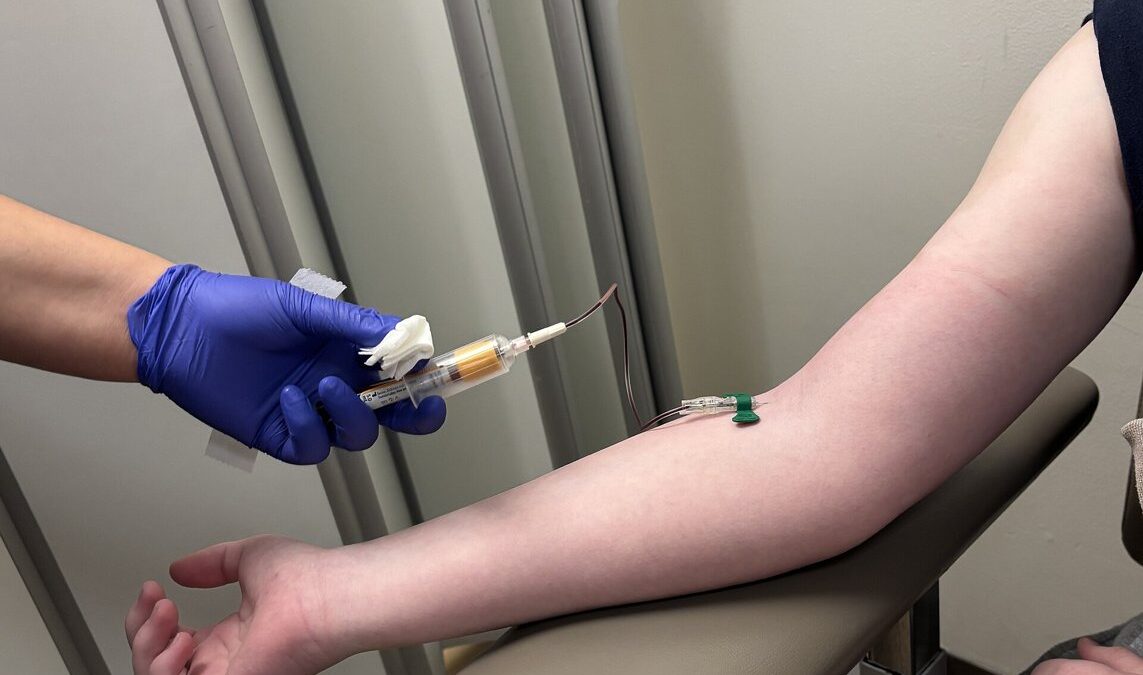
Image: Blood draw at the laboratory at UCLA Medical Plaza (illustrative file photo) by Jengod, CC BY-SA 4.0, via Wikimedia Commons.


Join the conversation