Nov. 22 (TodayViralUSA) — The COP31 United Nations climate summit in Antalya, Turkey, ended on Sunday without a final political agreement, after nearly 200 countries failed to bridge deep divisions over fossil fuels and financial support for developing nations.
Talks that were scheduled to close on Friday ran two days into overtime, making it the longest UN climate conference on record, according to the BBC. The last time a COP’s main political agreement collapsed in this way was in Copenhagen in 2009.
Fossil fuels vanish from the text
A first draft circulated last Monday referred to “fossil fuel” or “fossil fuels” six times, language that oil-producing nations found unacceptable. By the time exhausted delegates received a new compromise text early Sunday, the words did not appear at all; the only indirect reference was a nod to the 2023 COP28 commitment to “transition away” from fossil fuels in energy systems.
The European Union formally objected. “It is unconscionable that we would have a climate pact that makes no mention of fossil fuels,” said Irish minister Darragh O’Brien, speaking for the bloc. Panama and the Marshall Islands also refused to back the deal, with the Marshall Islands saying acceptance would amount to a betrayal of its people.
Saudi Arabia, speaking for the League of Arab States, defended the text’s references to carbon capture and storage, while Russia warned that moving away from coal, oil and gas too quickly would lead to “fuel poverty.”
“I understand that there is no agreement on this text. For that reason, these decisions have not been adopted,” said COP31 President Murat Kurum, Turkey’s environment minister.
Money for adaptation also unresolved
Poorer countries objected that the draft contained no concrete figures or baseline for last year’s pledge at COP30 in Brazil to triple finance to help nations adapt to heatwaves, droughts and other climate impacts.
The United States did not take part. The Trump administration has withdrawn from international climate negotiations, and this was the second consecutive year the U.S. was absent.
‘No ambiguity in the science’
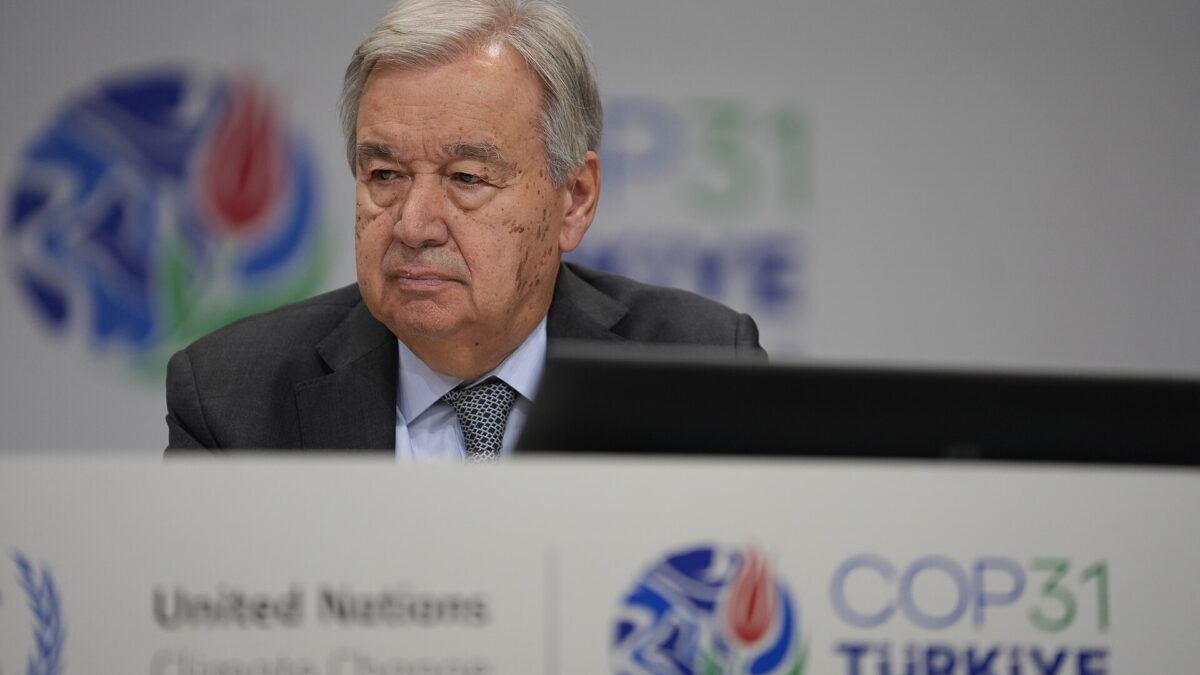
UN Secretary-General António Guterres, attending his last COP before stepping down, said he was “deeply disappointed.” “There may be no consensus in the negotiating room. There is no ambiguity in the science,” he said, adding that the world is now on course to exceed the 1.5°C warming limit set in the 2015 Paris Agreement.
Australian minister Chris Bowen, who led the negotiations as COP31 president of negotiations, cited “unbridgeable red lines” and “the most complicated and fraught geopolitical environment in living memory.”
What survived — and what comes next
Some agreements were reached, including progress on a “just transition” mechanism to support workers and communities as economies shift to clean energy. More than 80 countries backed a Turkish goal to raise electricity’s share of global energy use to 35% by 2035, the BBC reported.
UN climate chief Simon Stiell said he would seek advice on possible reforms to the consensus-based process. “The world cannot afford a repeat of this moment,” he told delegates. The next summit, COP32, is scheduled for November 2027 in Addis Ababa, Ethiopia.
Sources & Credits
- UN News: COP31 ends without climate pact as UN chief warns there is ‘no ambiguity in the science’
- BBC News: COP31 climate talks fail to reach deal amid fossil fuel and money rows
- The Guardian: Cop31 climate talks break down as key deal rejected
- EUobserver: COP31 in Antalya: five takeaways
Image: UN Secretary-General António Guterres at COP31 in Antalya, Turkey, Nov. 13, 2026. Xuthoria, CC BY-SA 4.0, via Wikimedia Commons.



Join the conversation