Nov. 22 (TodayViralUSA) — A sharply divided federal appeals court has ruled that the House of Representatives violated the Constitution when it used pandemic-era proxy voting to pass a $1.7 trillion government funding package in 2022, a decision that leaves federal pregnancy-accommodation protections unenforceable against the state of Texas as an employer.
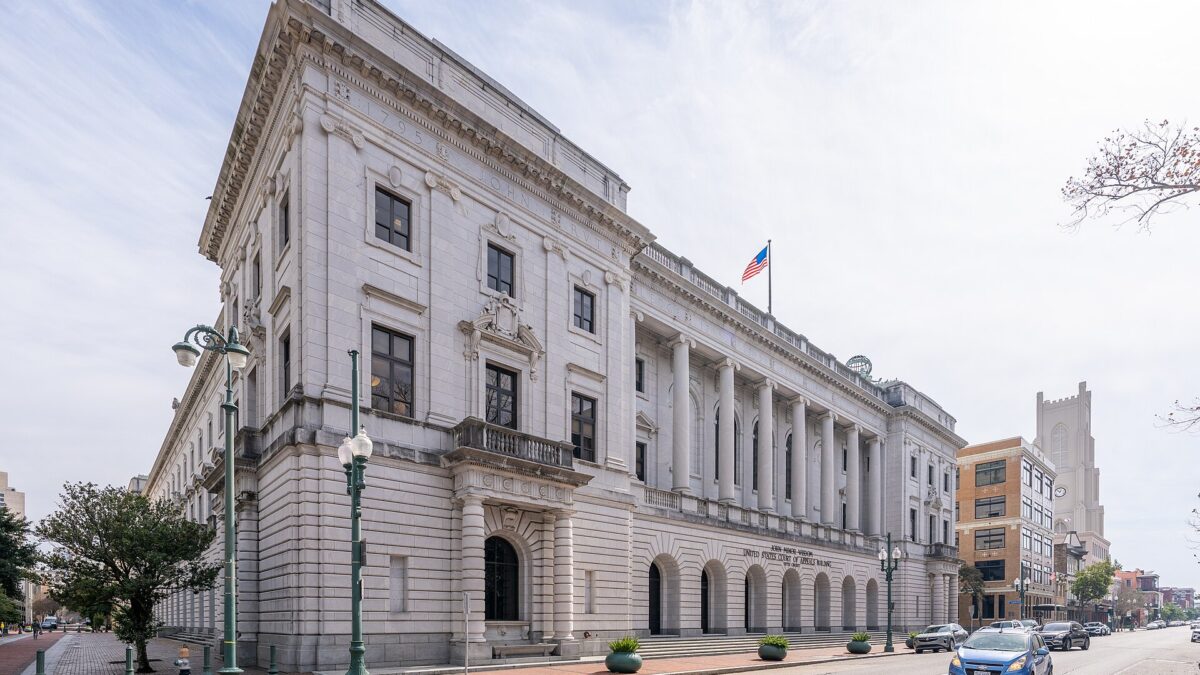
The full U.S. Court of Appeals for the Fifth Circuit, based in New Orleans, ruled 9-8 on Friday in State of Texas v. Blanche, upholding an injunction won by outgoing Texas Attorney General Ken Paxton.
What the court decided
The majority held that the Constitution’s Quorum Clause requires a majority of House members to be physically present to conduct business, and that lawmakers recorded as present by proxy do not count. “While the chambers of the legislature have much discretion regarding their rules of procedure, the Quorum Clause’s constraints on congressional power cannot be circumvented by congressional fiat,” wrote Judge Cory Wilson, a Trump appointee.
The House adopted proxy voting in May 2020 as an emergency measure during the Covid-19 pandemic. It used the rule to pass the Consolidated Appropriations Act of 2023 on Dec. 23, 2022, by a 225-201 vote, with 226 members recorded as present by proxy. Republicans scrapped the rule after taking control of the House in 2023.
A narrow remedy for now
Although the reasoning concerns how the entire spending law was passed, Texas challenged only one piece of it: the Pregnant Workers Fairness Act, which requires employers to provide reasonable accommodations to pregnant workers, such as more bathroom breaks, access to water and limits on heavy lifting.
The relief is limited. The ruling bars the Justice Department and the Equal Employment Opportunity Commission from enforcing the law against Texas and its state agencies; it does not repeal the law or void the broader spending package, according to Reuters and Bloomberg Law. Employment lawyers have advised affected Texas state employees to rely on Title VII and state law in the meantime.
Strong dissent
Judge James Graves, an Obama appointee, called the ruling “illogical, inexplicable, and invalid” in a dissent joined by six colleagues. He argued that the majority read a physical-presence requirement into the Constitution that does not exist, and asked why, if the whole law was unconstitutionally passed, the decision “should be limited only to one small sliver of the multitrillion dollar bill.” Judge Catharina Haynes dissented separately.
Wider implications
Legal analysts say the reasoning could invite challenges to other provisions of the 2022 package, which also carried the Electoral Count Reform Act, though future challengers would still need to establish standing. Worker advocates warned that courts in Texas, Louisiana and Mississippi, which make up the Fifth Circuit, could rely on the decision in related cases.
An appeal to the Supreme Court is widely expected. A petition for review is due within 90 days of the judgment unless a justice extends the deadline. The case could also be affected by a change in leadership at the Texas attorney general’s office, which a Democrat won in this month’s election and will take over in January.
Sources & Credits
- NBC News / Reuters: House unconstitutionally passed spending bill in 2022, appeals court rules
- Associated Press: Appeals court says federal law requiring accommodations for pregnant workers is unconstitutional
- CourtNews: Divided Fifth Circuit says House proxy voting violated the Quorum Clause
- Justia: State of Texas v. Blanche, No. 24-10386 (5th Cir. 2026)
Image: The John Minor Wisdom U.S. Court of Appeals Building in New Orleans, home of the Fifth Circuit. ajay_suresh, CC BY 4.0, via Wikimedia Commons.



Join the conversation