Nov. 22 (TodayViralUSA) — A long-running campaign to elect presidents by national popular vote could be closer than ever to taking effect after Democrats’ sweeping gains in this month’s midterm elections handed the party full control of several battleground states.
The National Popular Vote Interstate Compact is an agreement among states to award their electoral votes to the winner of the nationwide popular vote rather than the winner of each state. It takes effect only once member states together hold 270 electoral votes — a majority of the Electoral College.
The math
The compact currently has 222 electoral votes from 18 Democratic-led states plus the District of Columbia, NPR reported. Next year, Democrats will fully control Arizona, Pennsylvania, Michigan, Nevada and Wisconsin, which together hold 61 electoral votes. Any combination of at least four of those states joining would push the compact past 270. No Republican-led state has joined.
Governors and incoming governors in Pennsylvania and Nevada have said they are open to signing legislation to join, while others have not publicly weighed in. Arizona Gov. Katie Hobbs, who previously supported the measure, has not commented recently on whether the state should sign on, according to NPR.
“I’ve never been more confident that 63% of American voters can get what they want in the 2028 presidential election, which is a national popular vote for president,” said Patrick Rosenstiel, a senior consultant to National Popular Vote, the group behind the effort, citing Pew Research Center polling.
Battleground reluctance and legal questions
Significant obstacles remain. All five states are presidential battlegrounds that would be giving up outsized influence over national campaigns, and their leaders must decide whether to become the tipping point for a fundamental change in how the country chooses its president.
Some legal scholars argue the agreement could violate the Constitution’s Compact Clause, which bars states from entering agreements with one another without the consent of Congress. Norman Miller, a constitutional law professor at Willamette University, also warned of practical problems in requiring electors to follow vote tallies from other states, and said a change of this scale should be pursued through a constitutional amendment.
John Koza, chairman of National Popular Vote, countered that existing law already provides for certified vote counts from every state. “All that has to be done is add them up,” he told NPR. Opponents including the group Save Our States argue that abandoning the Electoral College’s incentives would push American politics toward more regional divisions.
A 1969 effort to abolish the Electoral College through a constitutional amendment failed, and few amendments have come close to passage in recent decades.
Sources & Credits
- NPR: An effort to circumvent the Electoral College may be within reach. But hurdles remain
- National Popular Vote: National Popular Vote Interstate Compact
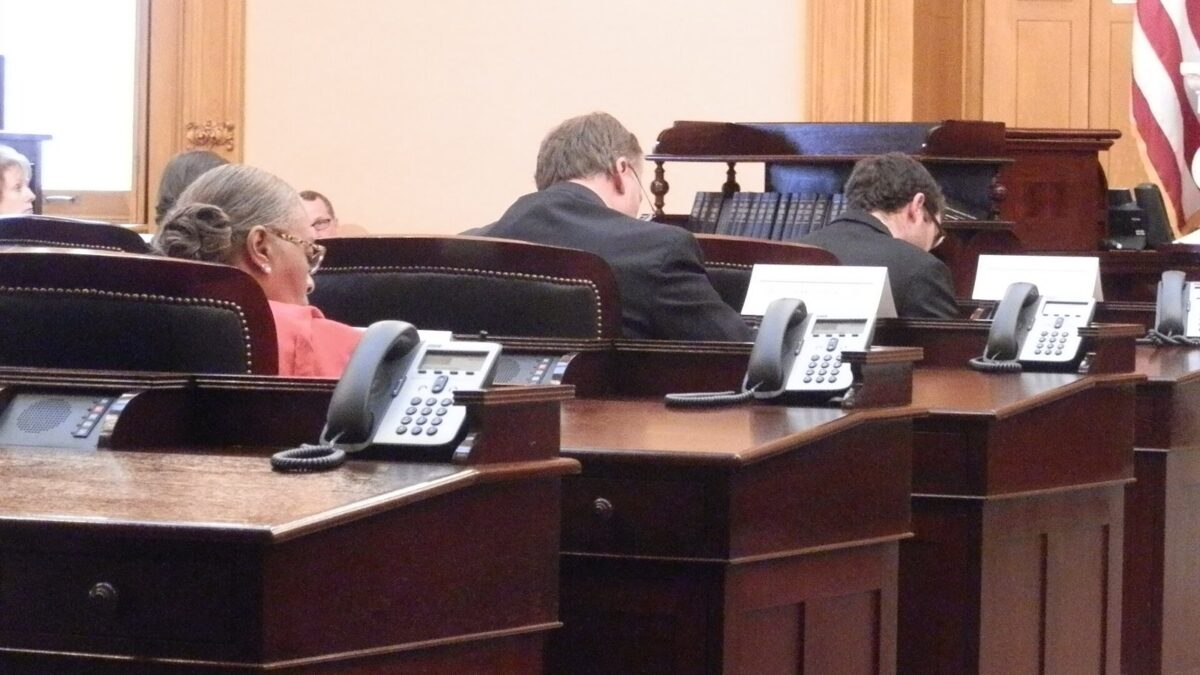
Image: Members of Ohio’s Electoral College sign their presidential ballots in 2012. Ibagli, CC0, via Wikimedia Commons.

Join the conversation