STOCKHOLM, Oct. 7 (TodayViralUSA) — The 2026 Nobel Prize in Chemistry has been awarded to Henri B. Kagan of France and Kenso Soai of Japan for discoveries that explain how chemical reactions can favor one mirror-image version of a molecule over the other, a puzzle that had stumped scientists for more than a century.
The Royal Swedish Academy of Sciences honored the pair “for the discovery of non-linear effects and autocatalysis in asymmetric organic synthesis.” They will share the prize of 12 million Swedish kronor equally.
“Henri Kagan and Kenso Soai have provided a solution to a chemical mystery that is over a century old: how homochirality can emerge spontaneously. The chemical reactions they have developed are spectacular,” said Heiner Linke, chair of the Nobel Committee for Chemistry.
Why mirror images matter
Many molecules, including the amino acids that make up proteins, come in two forms that are mirror images of each other, much like a left and a right hand. Living organisms, however, use almost exclusively one version, a property chemists call homochirality. For decades, laboratory reactions that could produce either form tended to yield equal amounts of both.
That matters well beyond theory. In medicines and other compounds designed to interact with the body, typically only one mirror image produces the intended effect, so chemists have long sought reactions that make just the version they need.
Two decisive steps
Kagan took the first major step in 1986, when he discovered a way of steering reactions that produced a larger excess of one mirror image than scientists had thought possible, an effect known as nonlinear because the imbalance in the product can exceed the imbalance in the catalyst used to make it.
Soai built on that work. In 1995 he described the first reaction with the potential to be fully homochiral, in which the product acts as a catalyst for making more of itself. By 2003 he had shown that a vanishingly small initial imbalance could be amplified to more than 99.5% of one form, a result the academy said no one other than life itself had previously achieved.
The laureates
Kagan was born in 1930 in Boulogne-Billancourt, France, earned his doctorate at the Collège de France in 1960 and is professor emeritus at what was then Université Paris-Sud. Soai, born in Hiroshima in 1950, received his Ph.D. from the University of Tokyo in 1979 and is professor emeritus at Tokyo University of Science.
The chemistry award follows this week’s prizes in medicine and physics. The laureates will receive their medals and diplomas at a ceremony in Stockholm on Dec. 10.
Sources & Credits
- NobelPrize.org: Press release: The Nobel Prize in Chemistry 2026
- Royal Swedish Academy of Sciences: The Nobel Prize in Chemistry 2026
- NobelPrize.org: Nobel Prize in Chemistry 2026 – Popular information
- Royal Society of Chemistry: Henri Kagan and Kenso Soai win 2026 Chemistry Nobel Prize
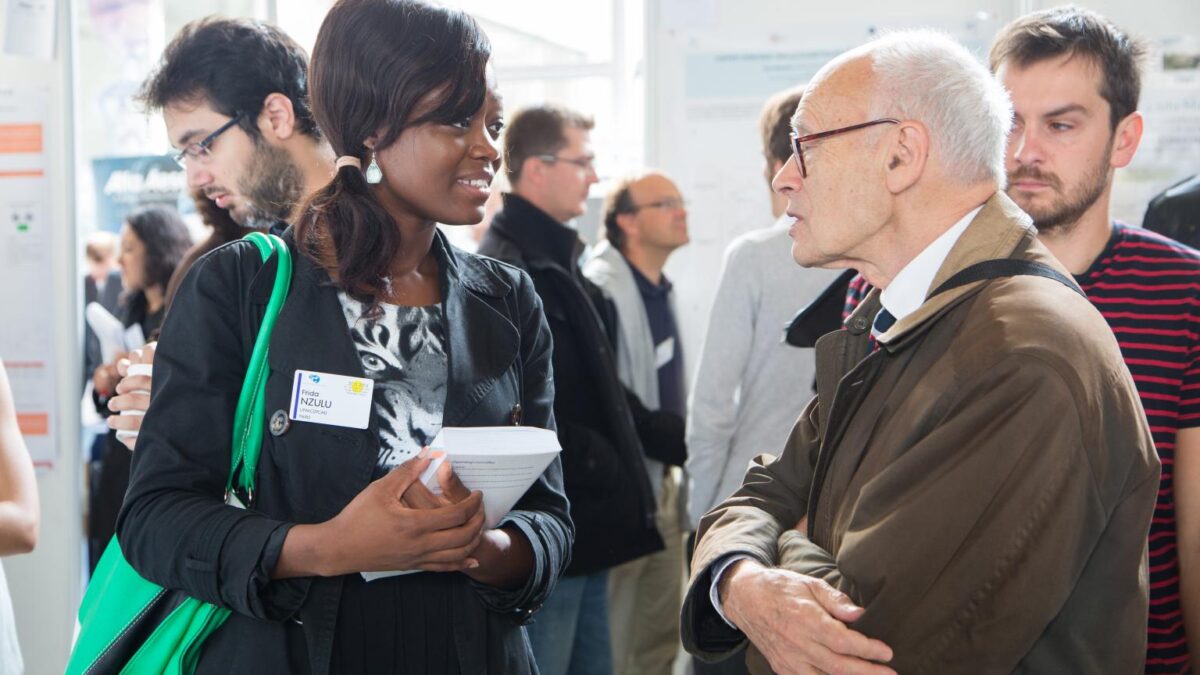
Image: École polytechnique from Paris, CC BY-SA 2.0, via Wikimedia Commons.

Join the conversation