QUANTICO, Va. — Defense Secretary Pete Hegseth announced plans for a new four-star combatant command dedicated to autonomous and robotic warfare, saying battlefield technology is advancing faster than the Pentagon’s acquisition system can match.
Speaking Wednesday in a “State of the Force” address at Marine Corps Base Quantico, Hegseth said the Autonomous Warfare Command, or AutoWarCom, would hold service-like authorities to scale drones, robotics, artificial intelligence-enabled targeting and related command-and-control tools across the joint force. A supporting memo sets a target establishment date of Oct. 1, 2027, contingent on congressional approval and enabling legislation.
“The pace of war is changing faster than the process to support it,” Hegseth said. He described drone warfare amplified by software-enabled targeting as the largest battlefield shift in generations and argued that lasting change must be anchored in military command structures.
The announcement builds on a Direct Reporting Portfolio Manager for Unmanned Systems created three months earlier and reporting to Deputy Defense Secretary Steven Feinberg. That office oversees development, procurement, fielding and sustainment of unmanned systems and absorbed existing efforts including Joint Interagency Task Force 401, the Defense Innovation Unit and the Defense Autonomous Warfare Group.
As an interim bridge, Hegseth launched Project Agincourt. He named Owen West, director of the Defense Innovation Unit, and Navy SEAL Senior Chief Max Strasiser to lead the effort for the next year in what he called a chief executive and chief operating officer partnership. Agincourt is tasked with prototyping “warfighting acquisition” — rapid cycles that put operators, engineers and private companies together and push spending decisions closer to combatant commands and front-line units.
Hegseth said the services will phase in new military occupational specialty frameworks to create career paths for personnel specializing in autonomous systems. He also argued for a “high-low mix” of exquisite weapons and large numbers of lower-cost autonomous platforms, comparing high-end systems to lightning and massed drones to the wind and rain of a storm.
Ukraine’s battlefield experience, he said, shows the need to adapt unmanned systems as quickly as conditions change. Realistic exercises — and combat when available — will help decide which technologies to expand, according to the secretary.
Lawmakers will need to approve authorities and funding before AutoWarCom can stand up as a full combatant command. Until then, Hegseth’s aides say the Agincourt team will focus on proving that faster acquisition cycles can deliver usable systems without waiting for traditional multiyear programs to mature.
A four-star commander for AutoWarCom has not yet been named. Until Congress acts, Project Agincourt and the existing unmanned systems portfolio will carry the Pentagon’s near-term push to field autonomous weapons at greater speed and scale.
Military Times: Hegseth announces new four-star command for autonomous warfare
Defense One: Hegseth plans Autonomous Warfare Command
CNN: Hegseth announces new autonomous weapons command
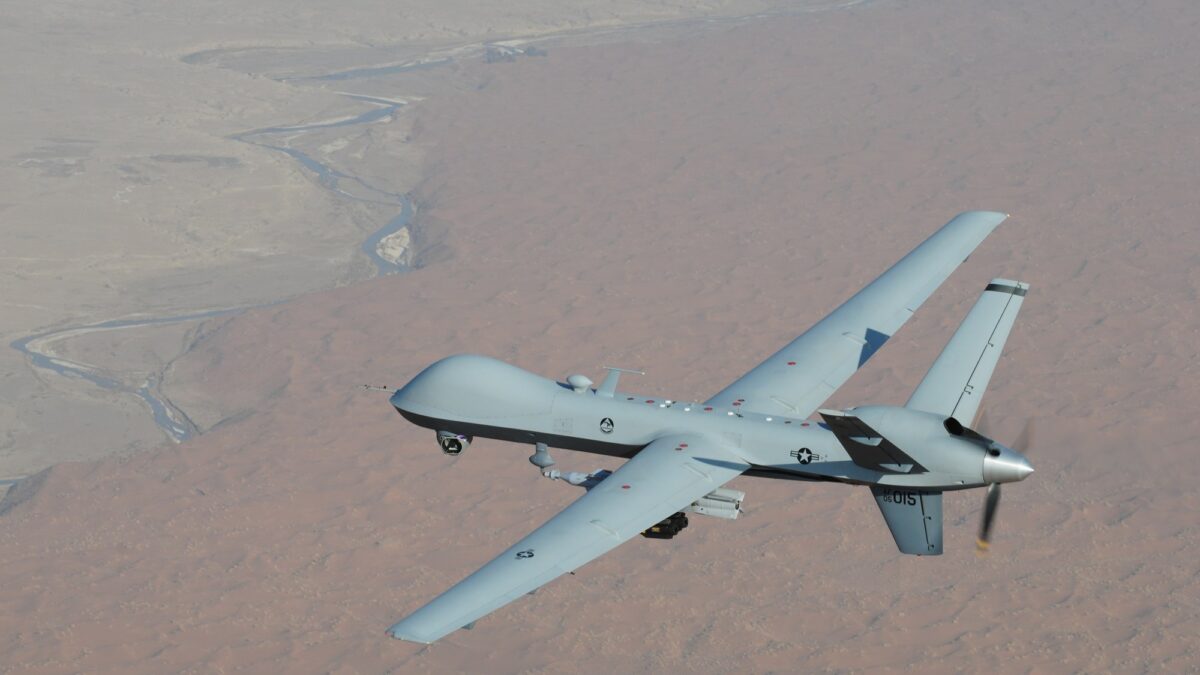
Image: U.S. Air Force MQ-9 Reaper unmanned aircraft. Photo by Lt. Col. Leslie Pratt / U.S. Air Force via Wikimedia Commons (public domain).



Join the conversation