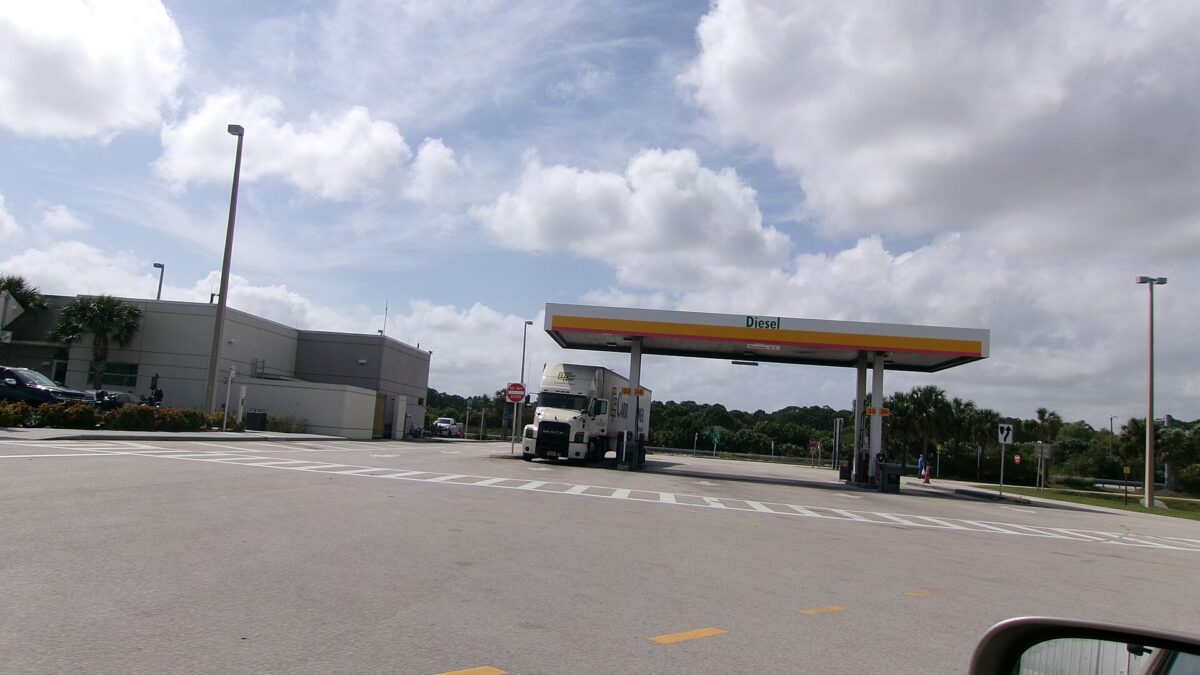
NEW YORK, Sept. 5 (TodayViralUSA) – The average U.S. retail price of diesel reached a record $5.85 a gallon on Friday, according to AAA. That tops the previous high of $5.82 set in June 2022, a few months after Russia invaded Ukraine. Energy and freight analysts say the jump could spread well beyond the trucking industry.
A year ago, diesel averaged $3.71 a gallon. On the Friday before U.S. and Israeli military action against Iran began earlier this year, it stood at about $3.76, according to FreightWaves. The national average has risen roughly 25 cents in the past four days alone.
Two supply shocks at once
Analysts point to two separate disruptions hitting the market at the same time. Iran’s response to the conflict has largely closed the Strait of Hormuz, the narrow waterway that carries about a fifth of the world’s oil. Meanwhile, Ukrainian drone strikes have damaged Russia’s refining sector, which produces a large share of middle distillates such as diesel.
Kevin Book, managing director of ClearView Energy Partners, said in a CNBC interview that middle distillates were “at the top of the list” of energy policy concerns. He noted that U.S. refineries are running “flat out” while Middle East supplies remain blocked and Russian output is curtailed. Book was skeptical that prices would fall quickly even if shipping through the strait returned to normal, pointing to questions about damaged infrastructure in the region.
Wholesale markets have been volatile. Ultra-low sulfur diesel futures on the CME, the starting point for pump prices, set an all-time settlement high earlier in the week before easing on Thursday and Friday. Retail prices usually trail wholesale moves by days or weeks.
Who pays
Diesel powers most of the U.S. freight system, including long-haul trucks, freight railroads, barges, farm equipment and construction machinery. Analysts say that means higher fuel costs eventually show up in the price of food and manufactured goods, though contracts and fuel surcharges spread the effect over time.
Small trucking companies and owner-operators are considered the most exposed. Larger carriers can often pass costs through fuel surcharge programs. Independent truckers, many of them working on thin margins in a soft freight market, may have less room to raise rates. Farmers face similar pressure as fall harvest begins.
Prices vary sharply by region. AAA data cited by the BBC show Washington state averaging $6.81 a gallon, reflecting higher taxes and the distance from major U.S. oil-producing regions.
Political stakes
The surge comes two months before the November midterm elections, with fuel costs high on voters’ list of concerns. President Donald Trump has pledged to “substantially lower Gas Prices for all Americans,” pointing to a new oil development agreement with Venezuela. Some analysts are skeptical that the deal will quickly overcome the long-standing obstacles to investment in Venezuela’s oil sector.
For now, economists say the course of diesel prices depends mainly on events outside U.S. control, namely the situation in the Strait of Hormuz and the condition of Russia’s refineries, factors that domestic policy can do little to change in the short term.
Update: U.S. presses Europe to release diesel reserves
October 2, 2026 — The Trump administration on Thursday told European allies, particularly Germany and France, to “immediately” release strategic diesel reserves to ease soaring fuel prices, Deutsche Welle reported, citing AFP and Reuters. The demand follows President Donald Trump’s suggestion that the United States may ban diesel exports to cool domestic prices ahead of November’s midterm elections.
Average U.S. diesel prices have risen more than 70 percent since the Iran war began, to about $6.39 a gallon, according to AAA data cited by DW. Germany’s ADAC motoring club reported an average diesel price of €2.409 per liter.
Energy Secretary Chris Wright told Fox News he was “highly confident” Europe could ease prices by drawing down emergency inventories, calling for a coordinated release into harvest and winter heating seasons. Treasury Secretary Scott Bessent said the United States had already released 172 million barrels under a March International Energy Agency agreement and urged allies to “match their commitments with action.”
People familiar with the talks told Reuters the United States warned France and Germany that failure to draw down stocks could bring a U.S. diesel export ban. European officials said the EU’s energy task force would hold an emergency meeting Friday and that the IEA had not yet asked Germany to release stocks. EU trade chief Maros Sefcovic said a U.S. export ban would have “very dramatic consequences” for Europe’s economy.
Sources & Credits
- BBC News: https://www.bbc.co.uk/news/articles/c7903r0grx0o
- FreightWaves: https://www.freightwaves.com/news/retail-diesel-has-never-been-this-expensive
- Transport Topics: https://www.ttnews.com/articles/diesel-hits-record-price
- Deutsche Welle: US pressures EU allies to release diesel stockpiles
- Reuters: US tells France and Germany to release diesel stocks or face export ban
- NBC News: U.S. pressures European allies to release diesel reserves
Image: DanTD, CC BY 4.0, via Wikimedia Commons.



Join the conversation