NEW YORK, Nov. 14 (TodayViralUSA) — The U.S. flu season has started unusually early and is gaining speed, federal health data show, with doctors urging Americans who have not yet been vaccinated to get a shot before Thanksgiving travel and gatherings.
In its latest weekly update, posted Friday, the Centers for Disease Control and Prevention said seven states reported high flu activity last week, up from two the week before. More than 3% of doctor’s office visits were for flu-like illness, a level that signals the season is under way, The Associated Press reported.
South and West hit first
The surge began in the South and West. The states with high activity are California, Louisiana, Oregon, South Carolina, Tennessee, Texas and Washington, according to the CDC, with Louisiana seeing the worst of it so far.
Flu season “is taking off and it’s taking off in a direction that’s only likely to increase in the next month or two,” said Dr. Fred Lopez, an infectious diseases specialist at LSU Health Sciences Center in New Orleans. “If you haven’t been vaccinated, you should get vaccinated now.” He said Louisiana is often among the first states to see surges, partly because of low vaccination rates, high poverty and barriers to health care.
Early numbers
The CDC estimates that flu has caused at least 2.6 million illnesses, 36,000 hospitalizations and 2,100 deaths so far this season. The agency said activity is higher than usual for this point in the year, though it is too soon to say whether the season will be worse than others.
One warning sign: the flu hospitalization rate in mid-October was the highest seen that early in the fall in more than 15 years, Dr. Anna Durbin of Johns Hopkins University said at a recent briefing.
For comparison, last winter’s season peaked in late December and, by the CDC’s estimate, caused at least 32 million illnesses, 380,000 hospitalizations and 24,000 deaths before fading by late March.
A mutated strain, but the vaccine appears to match
Most illnesses so far are caused by a version of the influenza A H1N1 virus carrying mutations that could help it evade immune defenses. Early data suggest this year’s vaccine “can recognize” the circulating virus, said Andrew Pekosz, an immunology expert at Johns Hopkins. “Right now there is no cause for concern,” he said, though vaccine effectiveness will not be known for months.
Doctors say people with significant symptoms should wait until they recover before getting vaccinated, but that those who already had flu this fall should still get a shot, because the vaccine protects against three strains and more than one often circulates in a season.
Sources & Credits
- PBS News / Associated Press: The U.S. flu season is off to a very early start. It’s hitting the South and West now
- CDC: FluView: Weekly U.S. Influenza Surveillance Report
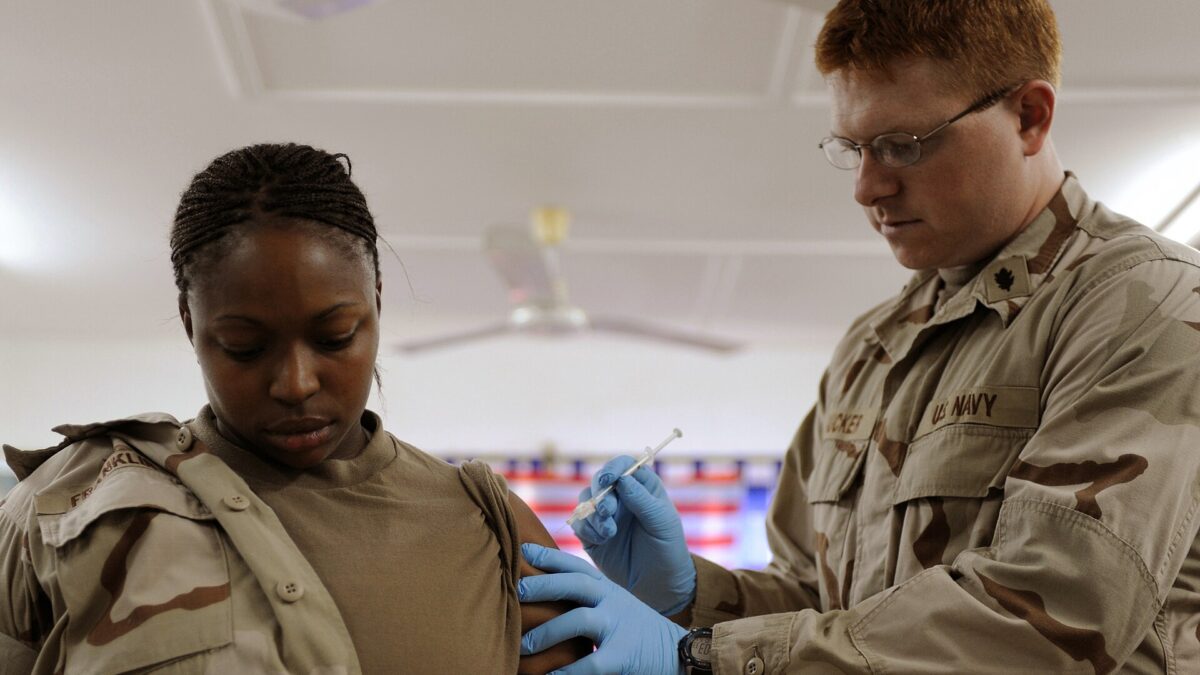
Image: A seasonal flu shot being administered (file photo, 2009), Master Sgt. Carlotta Holley, public domain, via Wikimedia Commons.

Join the conversation