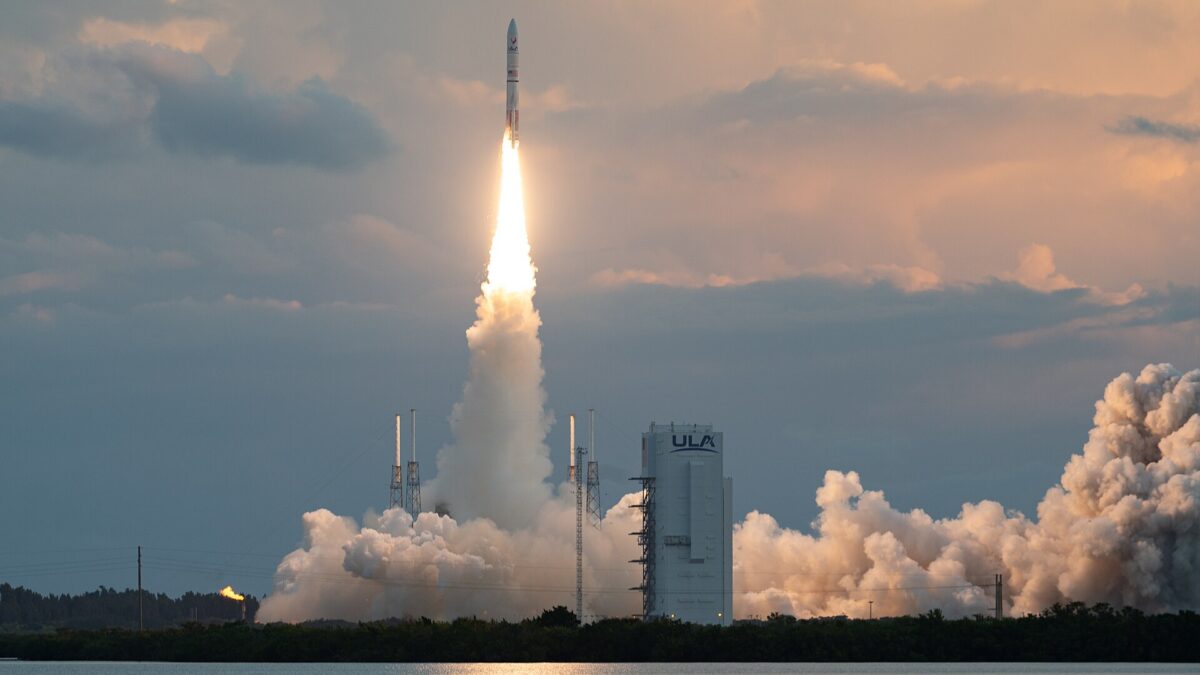
CAPE CANAVERAL, Fla., Nov. 16 (TodayViralUSA) — A United Launch Alliance Vulcan rocket failed roughly 10 minutes after liftoff from Florida on Sunday, destroying 40 internet satellites for Amazon’s Leo network in the first outright mission failure in the company’s 20-year history.
The rocket lifted off from Space Launch Complex 41 at Cape Canaveral Space Force Station at 12:40 p.m. ET after a brief hold at T-minus 20 seconds. About 50 minutes later, ULA confirmed the loss. “Based on data received by our Launch Director, we confirm that the Vulcan vehicle launched from Space Launch Complex 41 suffered an anomaly 10 minutes into the flight and failed to deliver the Amazon mission to orbit,” the company said, adding that it would work with its customer to find the cause and “return to flight as quickly as possible.”
Cause still unknown
ULA, a joint venture of Boeing and Lockheed Martin formed in 2006, said it did not yet have specific data on what went wrong. The timing points to the flight of the Centaur upper stage, according to Space.com. The rocket’s solid rocket boosters, which had nozzle problems on two earlier flights, appeared to perform as expected this time.
The Vulcan, which replaces ULA’s long-serving Atlas V, debuted in January 2024 and had flown four times before Sunday. Its first stage uses BE-4 engines built by Blue Origin; Spaceflight Now noted that the engines on Sunday’s rocket had been retrofitted with a fix after a valve problem in a BE-4 contributed to an explosion of Blue Origin’s New Glenn rocket on the launch pad in May. The Vulcan now faces a potentially lengthy grounding while engineers review telemetry.
A blow to Amazon’s Starlink rival
The launch was the first of 38 Vulcan flights Amazon has purchased for its Leo constellation, which is designed to compete with SpaceX’s Starlink. Amazon has also booked launches on Blue Origin’s New Glenn, Europe’s Ariane 6 and SpaceX’s Falcon 9, and ULA had already flown eight Leo missions on Atlas V rockets.
The network will need more than 3,200 satellites. Sunday’s flight would have brought the total launched to 436, according to Spaceflight Now. Engadget noted that the Federal Communications Commission had required Amazon to have 1,600 satellites in orbit by July 31, 2026, a milestone the company has not met, with around 390 in service.
With both the Vulcan and New Glenn now awaiting fixes, Amazon’s deployment schedule faces further delays.
Sources & Credits
- Spaceflight Now: ULA suffers first outright failure with loss of Vulcan rocket carrying 40 Amazon Leo satellites
- Space.com: Vulcan Centaur rocket fails during return-to-flight launch, 40 Amazon satellites lost
- Reuters: Rocket from Boeing-Lockheed firm fails mid-flight, destroys payload of Amazon satellites
- Engadget: ULA Vulcan Rocket Failure Destroys 40 Amazon Leo Satellites
- The Verge: Vulcan rocket fails, destroying 40 Amazon Leo satellites
Image: A ULA Vulcan rocket launches from Space Launch Complex-41 at Cape Canaveral Space Force Station, Oct. 4, 2024 (file photo), U.S. Space Force photo by Airman 1st Class Collin Wesson, public domain, via Wikimedia Commons.

Join the conversation