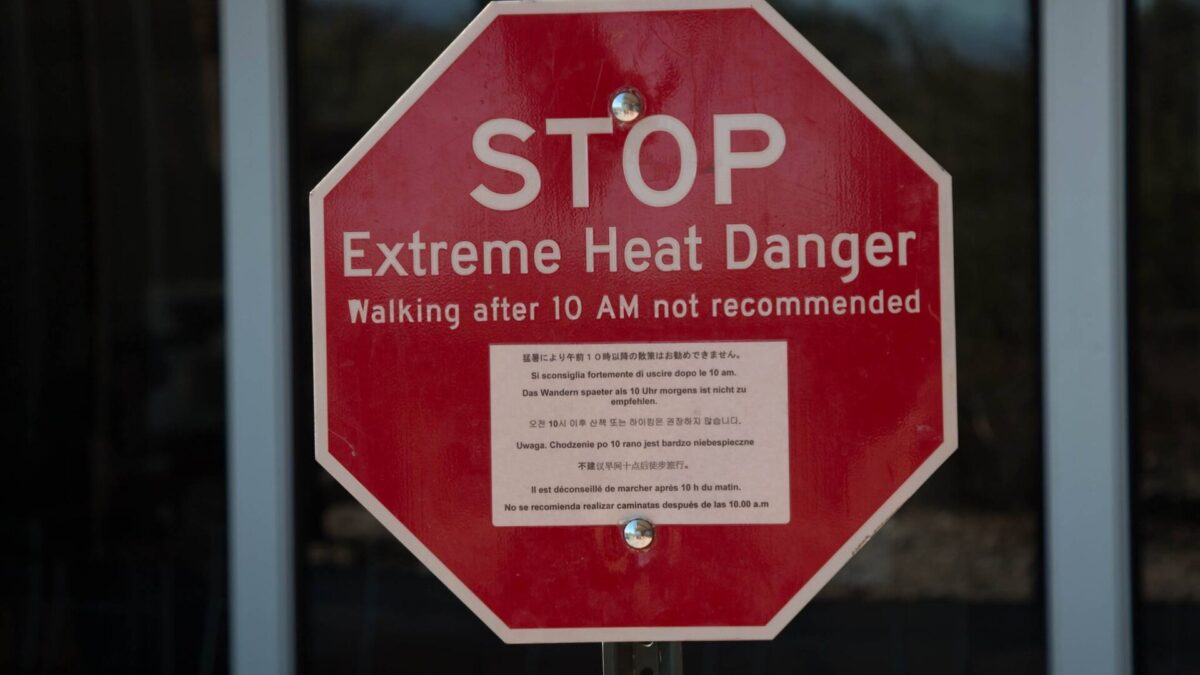
PHOENIX — An exceptionally strong heat wave set a new national record for March temperatures in the United States and then broke it again a day later, as readings across the West soared 20 to 30 degrees Fahrenheit above normal.
On Friday, four weather stations, two in Arizona and two in California, recorded temperatures of 112 degrees Fahrenheit (44.4 degrees Celsius), surpassing the all-time U.S. March record set just one day earlier. The new mark is only one degree below the national record for April. Eight states have set all-time March temperature records during the event.
A Week of Extremes
On Thursday, the temperature just outside Martinez Lake, Arizona, reached 110 degrees, at the time the highest March reading ever recorded in the country. The same day, Phoenix hit 105 degrees, the earliest date the city has reached that mark by more than a month.
A day earlier, North Shore, California, reached 108 degrees, tying the state’s hottest March temperature on record.
An Unprecedented Ridge
Meteorologists attributed the heat to an area of high pressure, the strongest ever observed over the Southwest in March. Known as a ridge for the northward bulge it creates in the jet stream, the system covered an enormous area and was forecast to persist for days.
Under such ridges, air sinks toward the surface and is compressed, warming as it descends. The air beneath the ridge is also stable, suppressing clouds and rain and allowing strong spring sunshine to heat the ground.
Climate scientist Daniel Swain described the event on his YouTube channel as one of the most meteorologically exceptional he had seen in the American West in recent years, adding that it was breaking records by absurd margins. He called it a summerlike ridge occurring in March.
Records Usually Fall Later
Record highs for March typically occur near the end of the month, when the climate is naturally warmer. This heat wave, arriving in the second half of the month but with strength more typical of late spring or summer, also surpassed some April records.
Scientists have documented a rising frequency of record-breaking heat across the United States as global temperatures increase. Early-season heat can catch residents and public health systems unprepared, since people have not yet acclimatized and cooling measures may not be in place.
Health and Water Concerns
Public health guidance during extreme heat generally urges people to limit strenuous outdoor activity, stay hydrated and check on vulnerable neighbors, older adults and those without air conditioning. Unusually early warmth can also accelerate the melting of mountain snowpack that supplies water to much of the West.
Because the ridge was forecast to persist for days, meteorologists warned that additional local and state records could fall before the pattern broke down.
Sources & Credits
- Scientific American: Everything about this week's record-shattering western heat wave is extreme
Image: National Park Service, Public domain, via Wikimedia Commons.



Join the conversation